When a property owner looks at a construction site or a backyard renovation project, their instinct is usually to ask for one thing: "Make it flat."
A flat piece of land looks neat. It looks like a blank canvas ready for construction or a soccer pitch ready for grass. However, in the world of civil engineering and professional landscaping, "perfectly flat" is a dangerous concept.
If a surface is perfectly flat, water has nowhere to go. It sits. It pools. And eventually, it destroys.
Whether it is a sudden torrential downpour in the UAE winter or the daily runoff from an irrigation system, water needs a path. If you do not provide that path through professional land grading, the water will find its own path—usually into your basement, under your foundation, or turning your expensive lawn into a swamp.
This is where the art and science of grading and leveling come into play. It is not just about smoothing out the bumps; it is about sculpting the earth to manage water.
In this guide, we will explore why ground leveling contractors are actually "water management experts," the difference between rough and final grading services, and why leveling uneven ground is the most important step in site preparation.

Imagine your property is a bathtub. If the bottom of the tub is perfectly flat, the water stays there after you pull the plug. You have to push it down the drain manually.
Now, apply this to your house. If the grading and site prep resulted in a perfectly level plot, water from rain or washing down the driveway will stagnate.
The Risks of Stagnation:
Professional ground leveling contractors understand that the goal isn't "Flat"; the goal is "Positive Drainage."
Positive drainage is a fancy term for a simple concept: Water should always run away from the building.
When we perform landscape leveling, we are essentially creating a very subtle, invisible ramp. To the naked eye, the backyard looks flat. But to a laser level (and to a droplet of water), there is a calculated slope.
The Golden Rule of Grading:Ideally, the ground should drop at least 2 to 3 inches for every 10 feet (roughly a 2% slope) as you move away from the house. This gentle slope uses gravity to guide water toward the municipal storm drains, the street, or a designated soak-away pit.
Achieving this requires more than a shovel. It requires laser grading equipment attached to skid steers or bulldozers to shave the earth with millimeter precision.
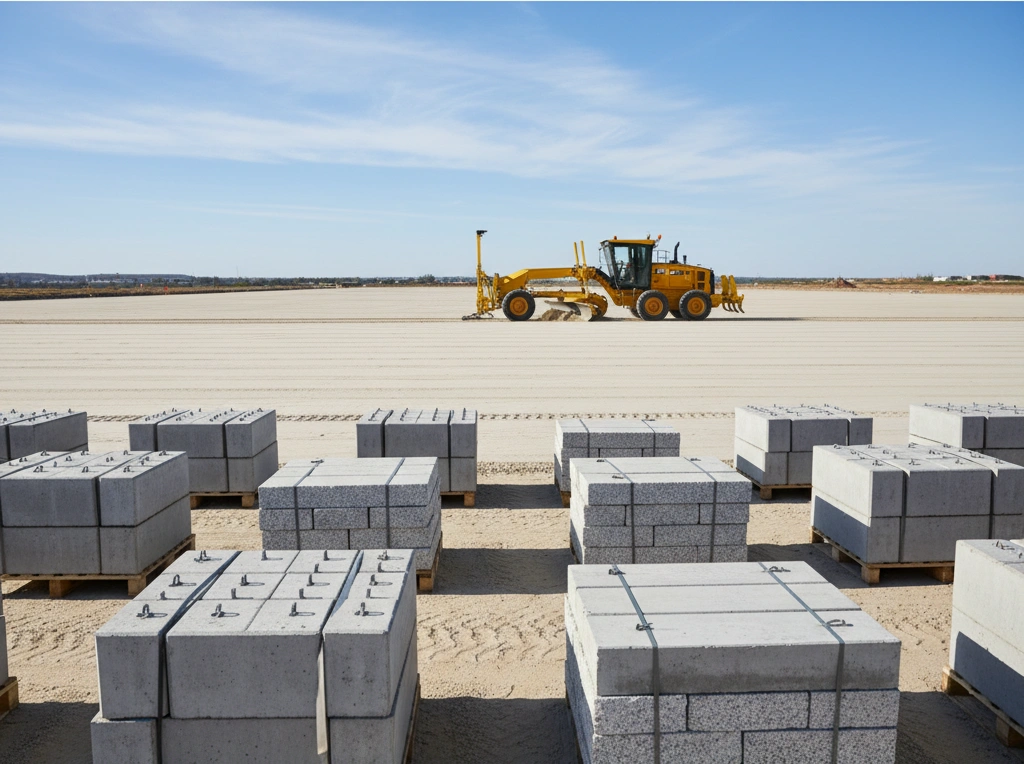
Creating this drainage plan happens in two distinct stages. Understanding the difference helps you know what to ask for when searching for ground leveling contractors near me.
This happens early in the project, often during grading and site prep before construction begins.
This happens just before landscaping (installing grass, pavers, or gravel).
If you skip final grading services, you might have good drainage, but you will have a bumpy, uncomfortable lawn.

We often get calls from clients who own established villas or commercial plots where the drainage has failed. The original contractor just flattened the dirt and left. Years later, the pavers are sinking, and the garden floods.
The Remediation Process:Fixing a site is harder than starting fresh, but it is necessary.
This process restores the property’s value and protects the structures from water damage.
Homeowners often rent a small bobcat or try to do land grading by hand with a rake."It looks flat to me," they say.
The problem is that the human eye is easily tricked. Over a 20-meter distance, a 10cm rise or fall is invisible to the eye, but it is a mountain to a stream of water.Without professional surveying tools and laser grading equipment, DIY attempts often result in:
Hiring professional ground leveling contractors ensures that the geometry of your land is mathematically correct.
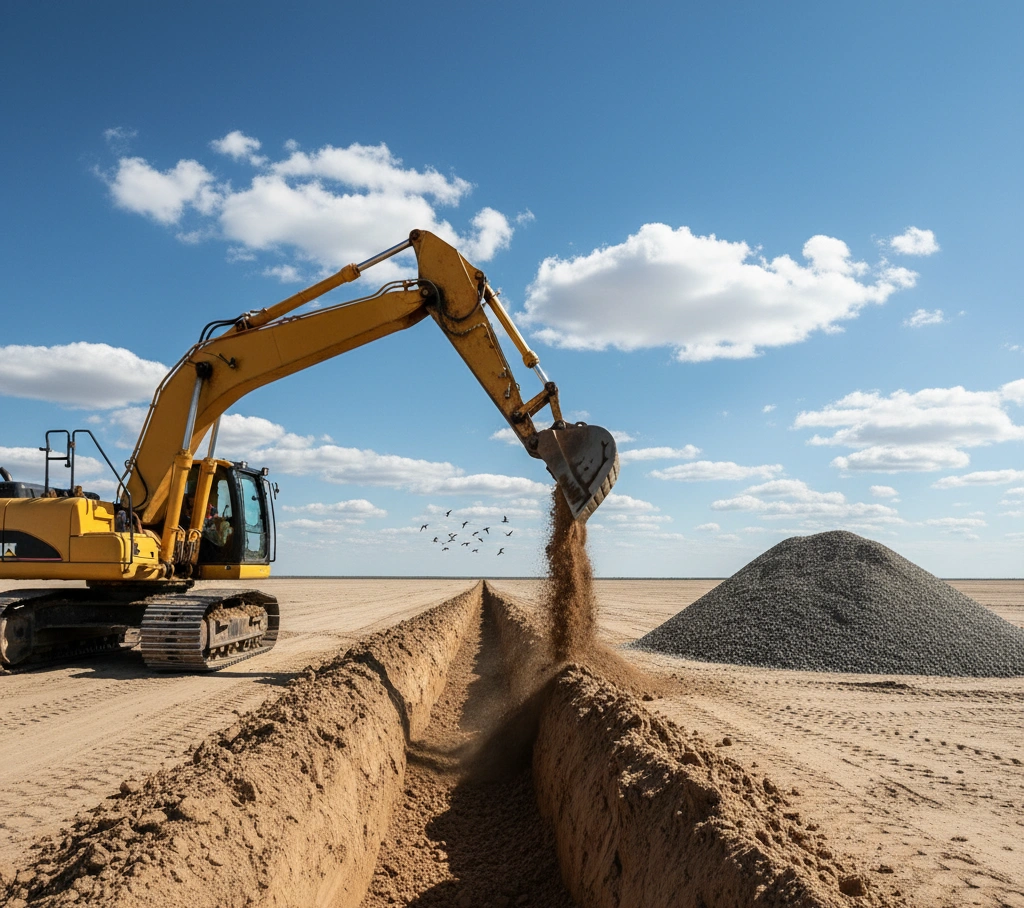
For commercial projects—warehouses, parking lots, or sports fields — grading and leveling takes on a new level of importance.A parking lot must be flat enough for cars to park comfortably, but sloped enough so that customers don't step into a puddle when they open their car door.
Site Prep for Paving:Before asphalt or concrete is poured, the sub-base must be graded to a tolerance of +/- 5mm.
Our grading and site prep teams work closely with paving contractors to ensure the earthwork provides the perfect, economical base for the hardscape.
Think of land grading as the immune system of your property. You don't see it working, but it protects everything else from disease (water damage).
A beautiful villa on a poorly graded lot is a liability. A simple plot on a perfectly graded lot is a secure investment.
Don't settle for "flat." Demand "functional."
Are you seeing puddles where they shouldn't be? Are you planning a new construction project?Don't guess with your groundwork. We are the premier ground leveling contractors near me (and you) that understand the science of drainage.
From leveling uneven ground to precise final grading services, we shape the earth to protect your investment.
Ready to level up?Visit our Ground Leveling Page to book a site survey and ensure your land is graded for success.
.png)