There is nothing more frustrating for a homeowner than investing a significant budget into a beautiful paved driveway (interlock), only to watch it turn into a roller coaster six months later.
First, you notice a small puddle that doesn't dry up after a car wash. Then, you feel your tire dip into a rut. Soon, individual pavers start to rock, and corners begin to stick up, creating a trip hazard.
Why does this happen? Most people blame the quality of the stone or the skill of the tiler. However, in 90% of cases, the problem lies deeper—literally underground.
Interlock pavers are a flexible surface system. They act like a skin; they will mirror exactly what lies beneath them. If the ground was poorly prepared, poorly compacted, or not graded to the correct slope, the pavers will inevitably fail.
In this guide, we will dissect the process of preparing ground for paving. We will explain why professional site preparation contractors are worth the investment compared to a DIY ground leveling machine rental, and how to ensure your new driveway stays flat for decades.
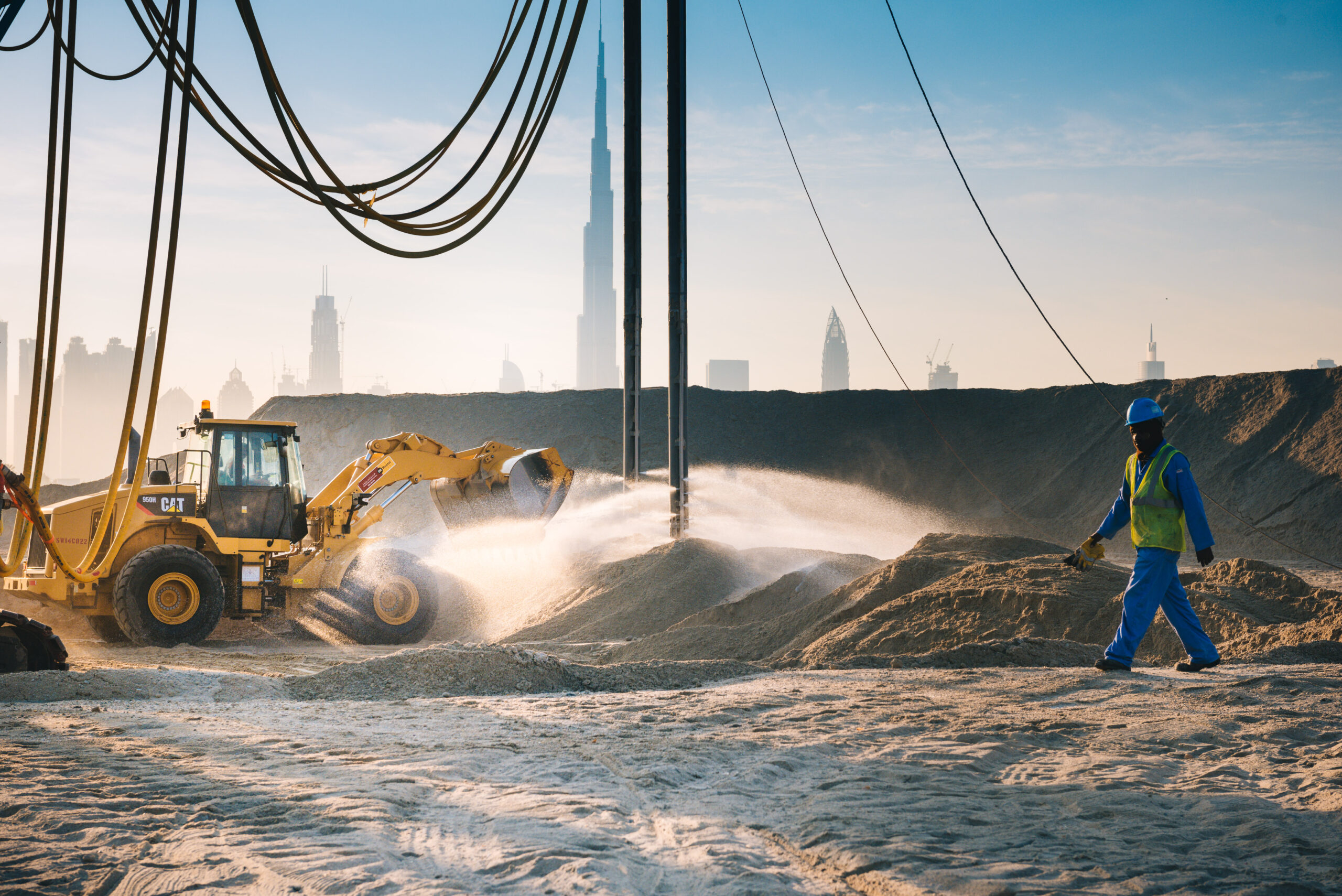
To understand the importance of leveling, you must understand the "layer cake" beneath your feet. A proper driveway consists of three layers:
"Waves" appear when the geometry of the first two layers is incorrect. If you hire casual laborers who simply scatter sand over construction debris and lay the tiles, failure is guaranteed. The sand washes away, the debris rots, and voids form.
High-quality site preparation services begin long before the first stone is delivered. It is an engineering process that requires strict adherence to elevations.
Before you can level the ground, you must clean it. Site clearing and preparation is the critical first step, especially for new villas or commercial plots.
If roots, wood scraps, or plastic waste are left buried under your future parking spot, they will decompose. As they rot, the ground sinks.Professional construction site preparation companies use heavy loaders to strip the top layer of vegetation and remove organic material. We must dig down to the stable, mineral soil.
Only once the site is medically clean can we begin to shape the levels. Attempting to save money here by grading over the top of grass is the most expensive mistake in landscaping.
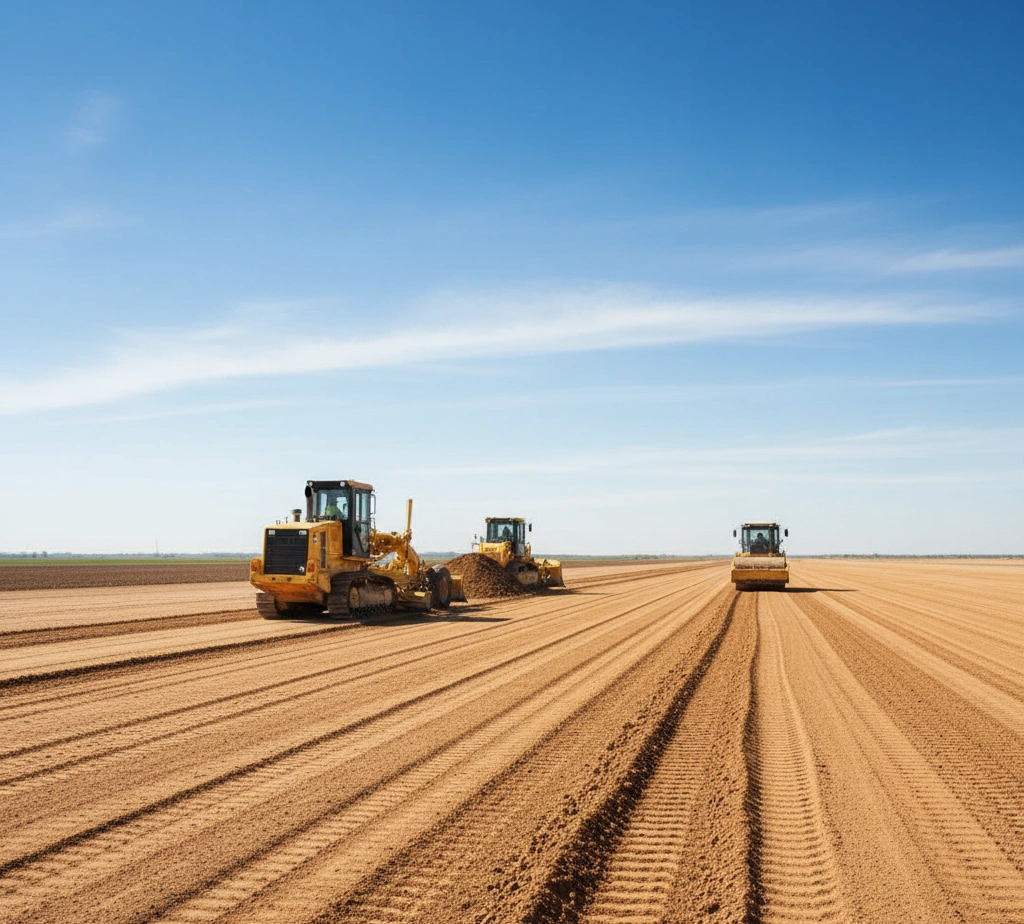
The number one enemy of paving is water. If water pools under the pavers, it liquifies the bedding sand, causing the stones to sink.This is where simple ground leveling transforms into technical grading.
We don't just make the ground flat. We create slopes.For a driveway, you need a minimum slope of 1-2% away from the house toward the street or storm drain. This means a drop of 1-2cm for every meter of length.
Using machinery like a Bobcat for leveling equipped with laser receivers allows us to set this slope with millimeter precision.
Proper building site preparation ensures that even during a heavy storm, water sheds off the surface immediately, keeping the sub-base dry and stable.
When homeowners look at quotes from site preparation contractors, they often feel tempted to do it themselves."I'll just rent a machine and spread the sand myself," is a common thought. Search terms like rent machine to level ground are popular for this reason.
Let’s compare the options.
You can find a company offering ground leveling equipment rental. They will drop off a skid steer.
A skilled operator on a Bobcat for leveling, often using a "Grading Bar" or Landplane attachment, can achieve a table-top finish in hours.They feel the machine and the soil. They know how to wheel-roll the sand to compact it and how to cut high spots without disturbing the density of the sub-base.
For high-stakes tasks like interlock or concrete site preparation, the operator's skill is more valuable than the machine itself.
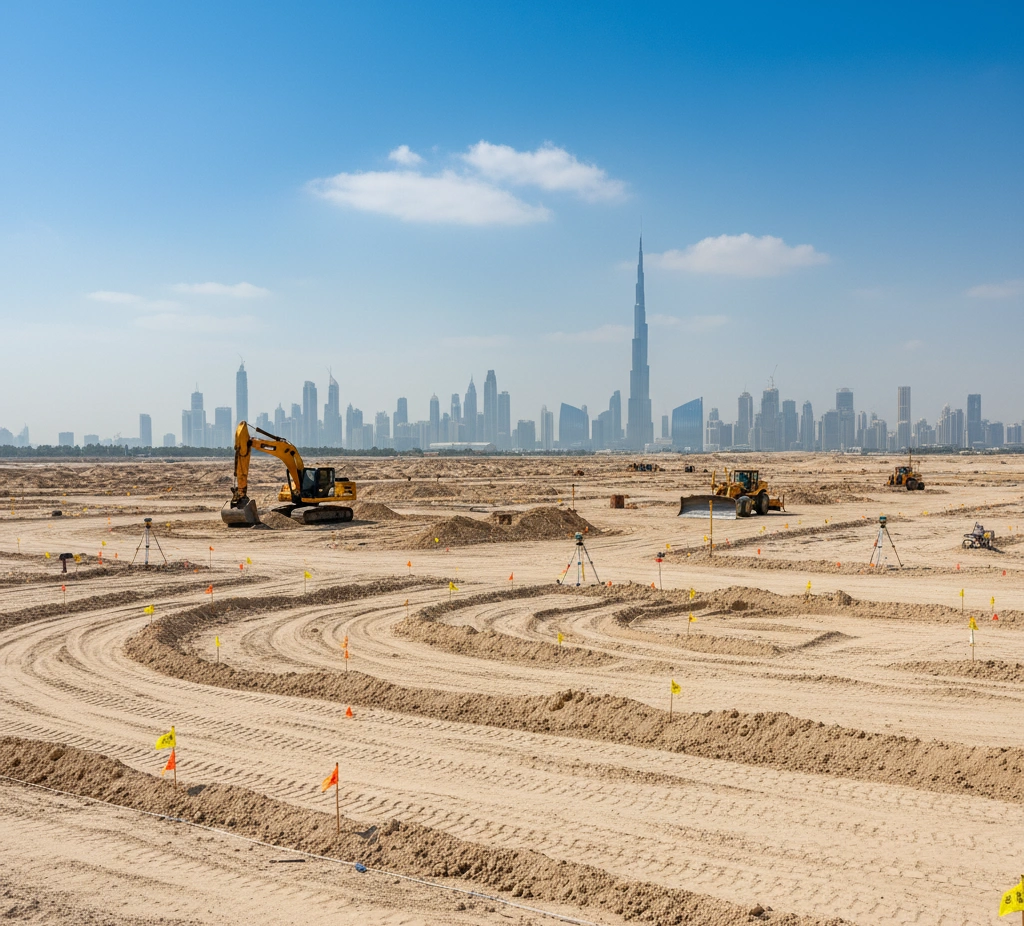
The same principles apply to larger projects but with higher stakes.Whether it is a shopping mall parking lot or an industrial yard, commercial site preparation demands rigorous quality control.
On large areas, errors compound. A slight leveling error at the start of a 100-meter parking lot can result in a 20cm error at the end, leading to massive flooding issues.Here, construction site preparation companies utilize heavier machinery and laser-guided grading systems to ensure planarity across thousands of square meters.
It is also worth noting that preparing ground for paving on commercial sites includes strict compaction testing to ensure the ground can support the weight of delivery trucks without rutting.
Leveling is only half the battle. The other half is density.After building site preparation is finished and the levels are set, the ground must be compacted.
Loose, leveled sand is a ticking time bomb.Professionals use heavy vibration plates or rollers. We compact in layers ("lifts").
If you chose the ground leveling machine rental route, did you also rent a 500kg plate compactor? Without it, all your leveling work will be undone the moment a car drives onto the driveway.

The longevity of your driveway or patio depends not on the color of the stone, but on the quality of the dirt work beneath it.Waves and puddles are not inevitable; they are the symptoms of poor preparation.
Don't gamble with your landscape. Instead of searching for rent machine to level ground and learning by trial and error, trust the earthworks experts.
Are you planning to install interlock or pour concrete? Start with the perfect grade.We are the leading site preparation contractors in the region. We own the fleet—from Bobcats for leveling to heavy rollers—and we have the engineering expertise to execute site clearing and preparation with precision.
No waves. No puddles. Just perfect paving.Visit our Ground Leveling Page to request a site survey and quote today.
.png)