You have designed the perfect backyard oasis. You know the shape, the tile color, and exactly where the sun loungers will go. You are ready to start. But before the first drop of water can flow, a massive amount of earth needs to move.
Inground pool excavation is the first major phase of construction, and it is also the most unpredictable. Unlike buying tiles or pumps, where the price is fixed, excavation involves the "great unknown": the geology beneath your feet.
When you search for pool excavation companies near me, the quotes you receive will often come with a caveat regarding soil conditions. Why? Because swimming pool dug into ground conditions generally fall into two categories: the "Easy" (Sand/Loam) and the "Hard" (Rock/Gatch).
In this guide, we will explore how these two extremes dictate the speed, method, and, most importantly, the excavation for pool cost.

In many coastal regions and specific residential developments, the ground is predominantly loose sand or soft loam. For swimming pool excavation contractors, this is generally the preferred scenario for speed, though it comes with its own technical challenges.
Digging in sand is fast. A standard excavator bucket slices through it like butter. There is no resistance, no loud banging, and very little strain on the machinery. A standard-sized residential pool can often be roughly dug out in a single day in these conditions.
While digging is easy, keeping the hole open is the hard part. Sand has no structural integrity. As the machine digs deeper, the walls of the pool shell are prone to collapsing back into the hole (slumping).To manage this, experienced excavation pool contractors must:
Generally, sand excavation keeps the excavation for pool cost at the lower end of the spectrum. The machine burns less fuel, and the job is finished quicker.
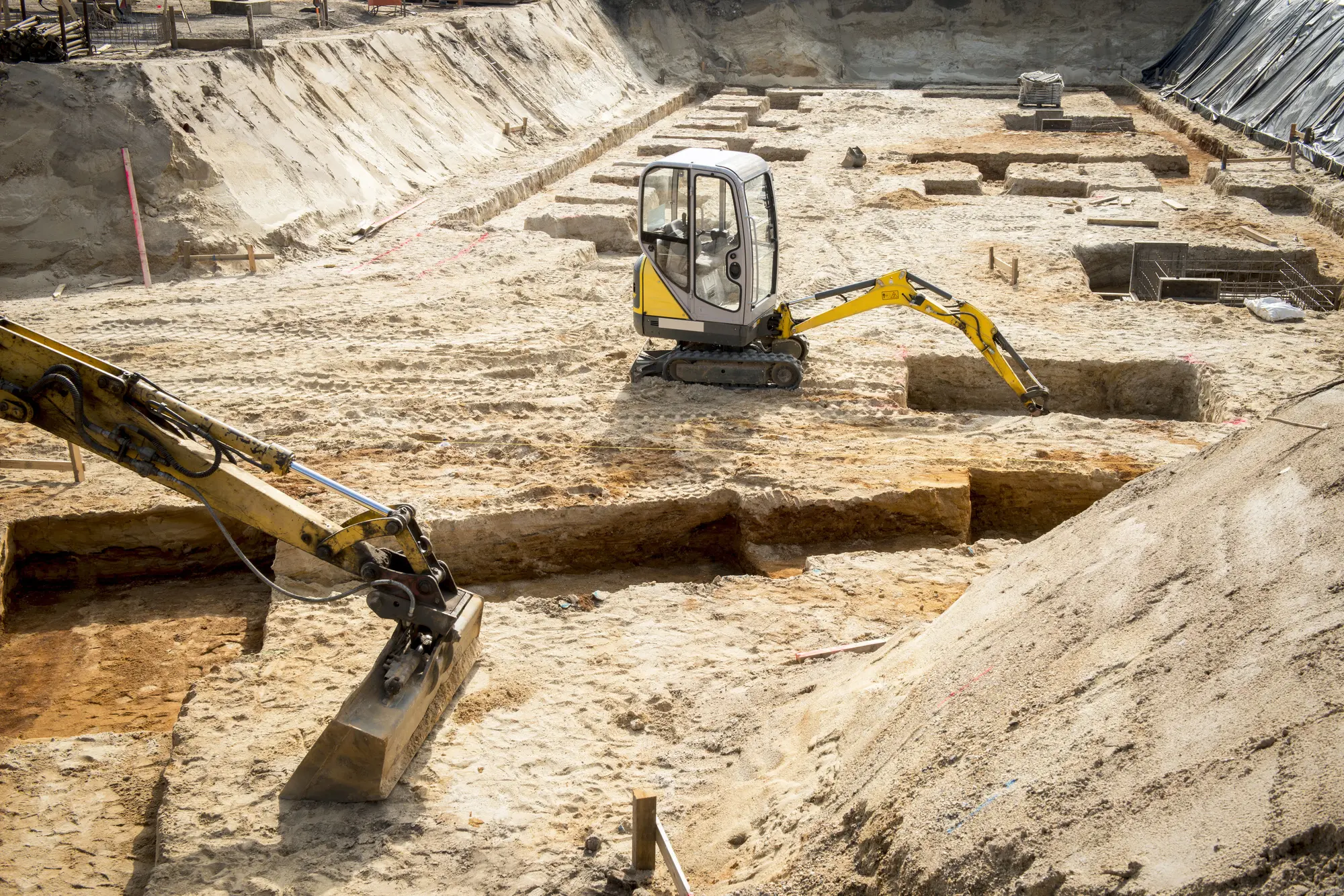
Then, there is the other side of the coin. You live in a hilly area or a region known for limestone, caprock, or "gatch" (a cemented sand-gravel mix common in the Middle East).
You might not know it’s there. You might have 30cm of soft topsoil covering a layer of bedrock that is as hard as concrete. This is the moment pool excavation contractors near me dread, but are prepared for.
A standard digging bucket cannot penetrate rock. It will simply scratch the surface.To continue inground pool excavation, the contractor must stop, remove the bucket, and attach a Hydraulic Breaker (often called a "pecker" or hammer).
Hitting rock significantly increases the excavation for pool cost.
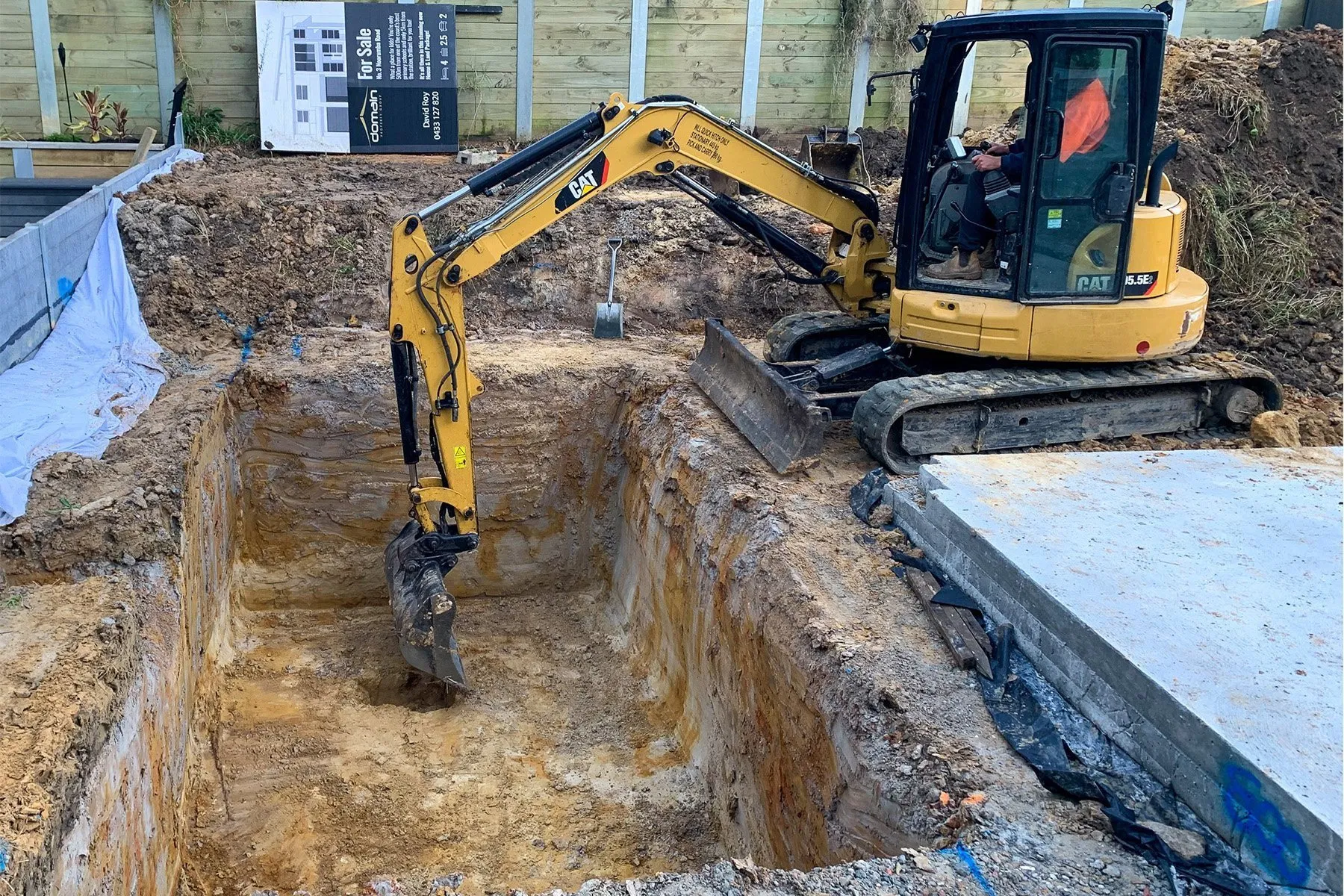
The situation gets trickier if you have pool excavation tight access.If your backyard is only accessible through a narrow 1-meter gate, we must use a "Micro Digger."
Micro diggers are fantastic machines, but they rely on physics. A 1-ton machine has a much smaller hydraulic hammer than a 20-ton machine.
When interviewing pool excavation contractors near me, always ask how their specific machinery handles rock in tight spaces. Experienced excavation pool contractors will be honest about the extended timeline required for this specific combination.
Because soil is unpredictable, most honest pool excavation companies near me will structure their quote with a "Provisional Sum" or a "Rock Clause."
This is not the contractor trying to rip you off; it is the only fair way to price the unknown. If they quoted everyone for rock, people with sand would overpay. If they quoted everyone for sand, the contractor would go bankrupt on the first rock job.
While you can't change your soil, you can prepare.
Whether you are building on a sandy beach or a rocky hill, the result will be the same: a beautiful swimming pool. The journey to get there, however, depends entirely on the soil.
Understanding the difference between digging and breaking helps you manage your expectations regarding noise, timelines, and budget. When you hire professional swimming pool excavation contractors, you are hiring them for their ability to handle these surprises efficiently and safely.
Don't let the fear of the unknown stop your project. Contact us today. We specialize in both pool excavation tight access and heavy-duty rock breaking. We provide transparent quotes and site assessments so you know exactly what to expect before we break ground.
.png)