For business owners and facility managers, the end of a commercial lease often brings a complex challenge known as "Dilapidation" or "Make Good." Most commercial tenancy contracts in prime real estate markets contain strict clauses requiring the tenant to return the premises to its original state before handing back the keys.
This state is widely known in the construction industry as "Shell & Core."
It means stripping away the branding, the glass partitions, the flooring, and the customized layouts to reveal the raw concrete structure. This is not a job for a standard cleaning crew. It is a precise construction project that requires professional interior demolition.
While you might associate demolition with bulldozers leveling buildings, interior strip-out is a surgical procedure. In this guide, we will explore how to execute a successful office reinstatement, manage the massive amount of waste, and why hiring a contractor with broad expertise—from site demolition to interior strip-outs—is your best safety net.
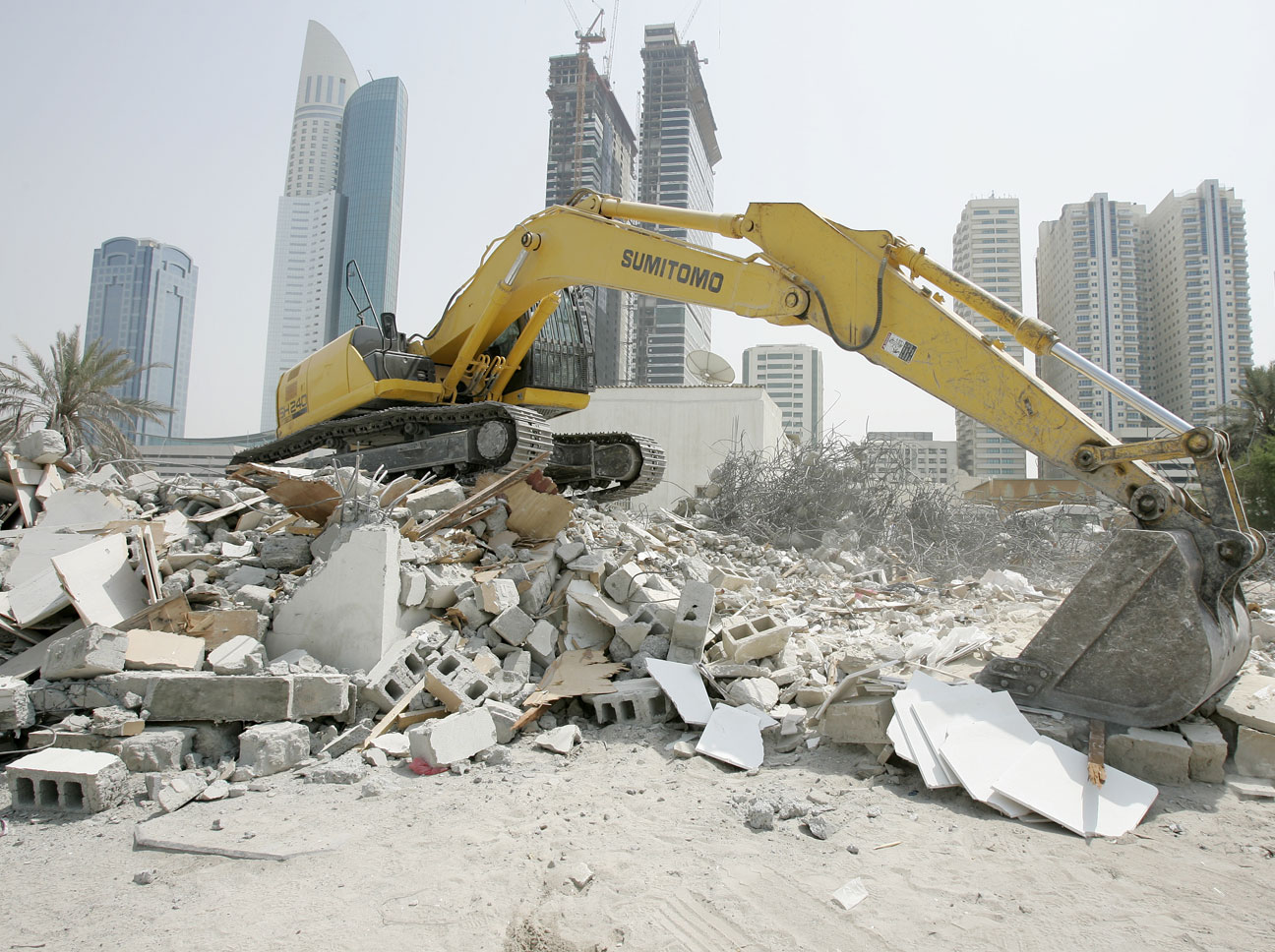
Before the hammers start swinging, it is vital to understand the goal.Shell & Core typically refers to a building that is complete on the outside but raw on the inside.When returning an office to this state, you are generally expected to leave:
Achieving this requires removing everything else. This includes the "Cat B" fit-out elements: meeting rooms, pantries, reception desks, and specialized IT cabling.
Every successful demolition project begins with a "soft strip." This is the manual removal of non-structural elements.Before we bring in heavy tools for block wall demolition, we must clear the clutter.
Once the "soft" items are gone, the structural changes begin. Many offices are divided by drywall partitions, but some (especially older buildings or ground-floor units) utilize masonry.
Block wall demolition is a critical phase.If your office design included soundproof meeting rooms or secure server rooms built from concrete blocks (CMU), these must be demolished.
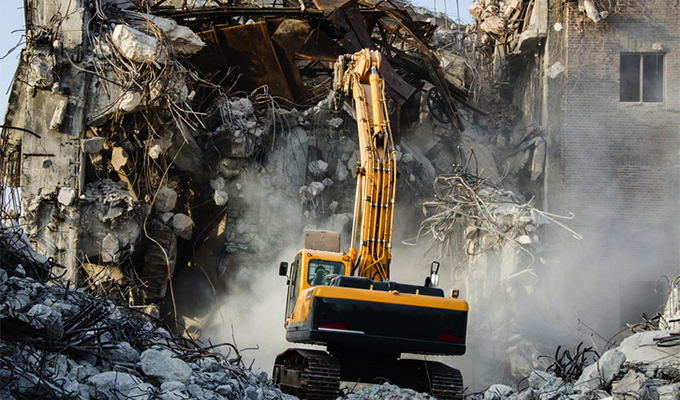
The volume of debris generated by stripping out a 5,000 sq. ft. office is staggering. You will be left with tons of gypsum, aluminum, glass, concrete rubble, and carpet.
This brings us to the logistics of construction waste removal.In a high-rise building, you cannot simply throw debris out the window. It requires a coordinated effort:
Proper documentation of waste disposal is often required by landlords to prove that you didn't fly-tip (illegal dumping). As a licensed contractor, we provide waste transfer notes for every load.
Sometimes, an office fit-out involves more than just walls. Did you install a heavy safe, a reinforced server room, or an internal staircase connecting two floors?
Returning these to Shell & Core might involve:
This is why hiring a general handyman is risky. They may not have the equipment for demolition excavation within a confined space. Our fleet includes compact excavators (robots) designed to work indoors, bringing the power of site demolition machinery into the office environment.
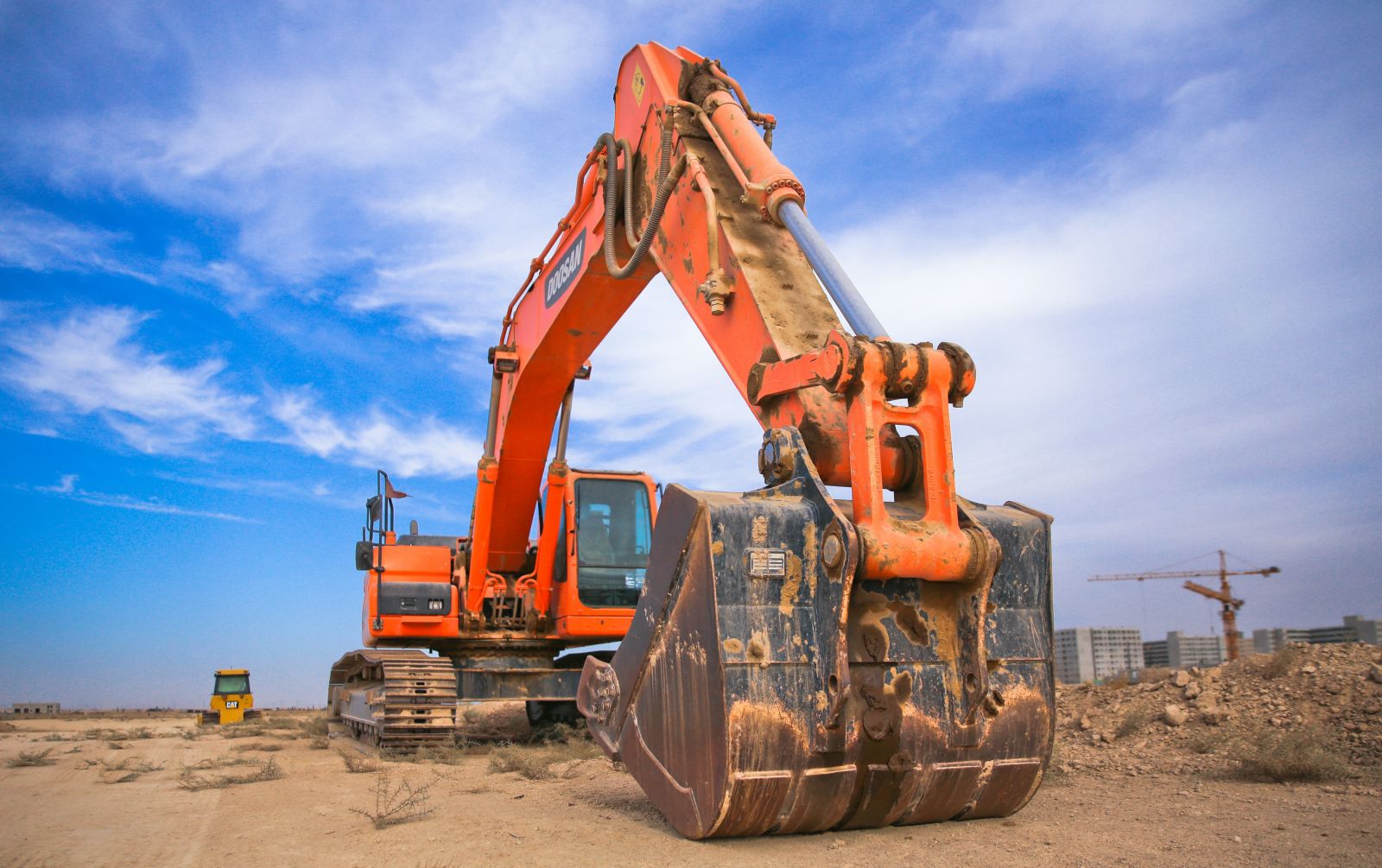
You might wonder, "Why do I need a company that does villa demolition to strip out my office?"
The answer lies in capability and safety.Companies that specialize purely in light interior work often struggle when things get tough. They might not have the tools for block wall demolition or the logistics for massive muck away services.
A comprehensive demolition contractor brings:
After the noise of block wall demolition and the dust of construction waste removal settles, the final phase begins."Making Good" involves:
The goal is to hand over a pristine, empty canvas to the landlord, ensuring you get your deposit back in full.
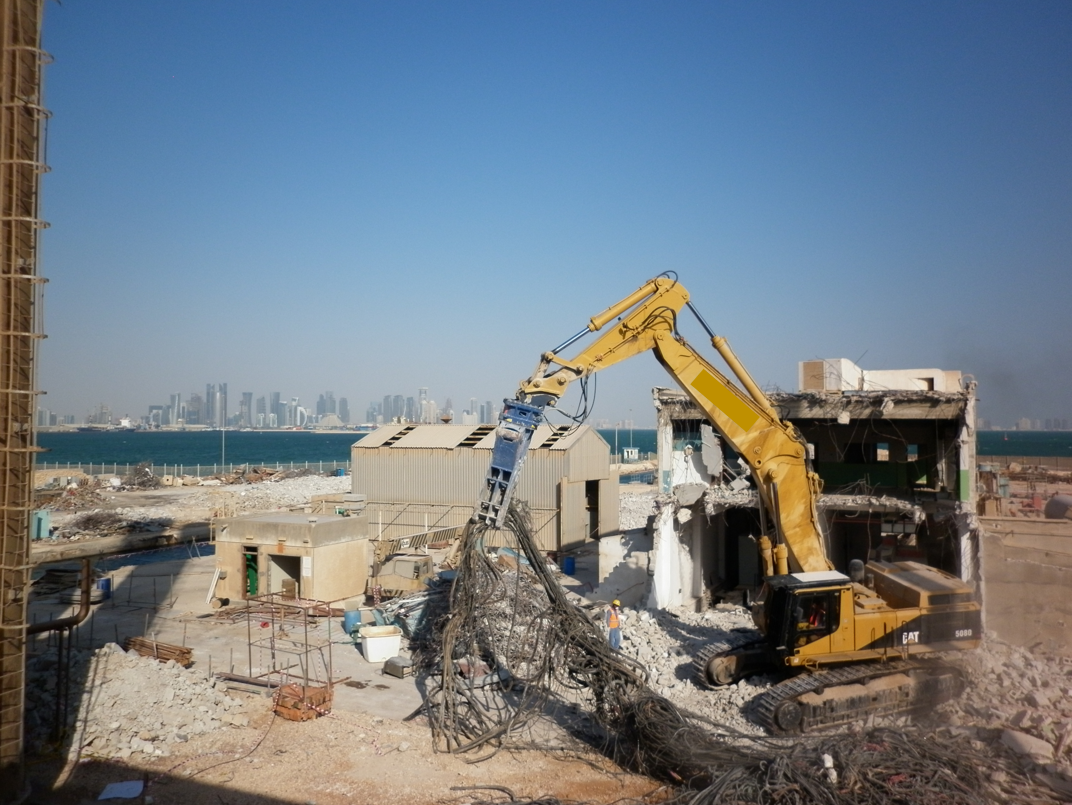
Returning an office to Shell & Core is a major construction operation. It involves risks, strict timelines, and the handling of tons of waste.
Whether you need a simple soft strip or complex retaining wall removal within a commercial space, you need a partner who understands the A-to-Z of demolition.
From complete villa demolition to precise interior strip-outs, we are the experts in clearing the way for what comes next. Our fully licensed team handles everything: permits, demolition excavation, and sustainable construction waste removal.
Don't risk your lease deposit with amateur work. Visit our Demolition Services Page to get a quote and ensure your handover is seamless.
.png)