In an ideal world, every construction site would be a vast, open field. You would have designated laydown yards for steel, separate zones for bricks, and ample room for trucks to turn around.
But in the real world of construction—especially in dense urban environments like Dubai or Abu Dhabi—space is the ultimate luxury. You are often building on a "postage stamp" plot, squeezed between existing towers, busy roads, or narrow residential alleys.
When you have zero storage space, how do you manage the thousands of tons of material required to build a structure?
You cannot stockpile. If you order all the bricks at once, you will block the entrance, and the project will gridlock.
The solution is Just-in-Time (JIT) Logistics.
JIT is a strategy where materials arrive exactly when they are needed for installation, not days or weeks before. It sounds simple, but it requires military-grade coordination and, most importantly, the right construction material lifting equipment.
In this guide, we will explore how to execute JIT logistics on tight sites. We will discuss why selecting the right loading unloading company is critical and how machinery like the Telehandler transforms the delivery process from "Drop and Store" to "Lift and Install."
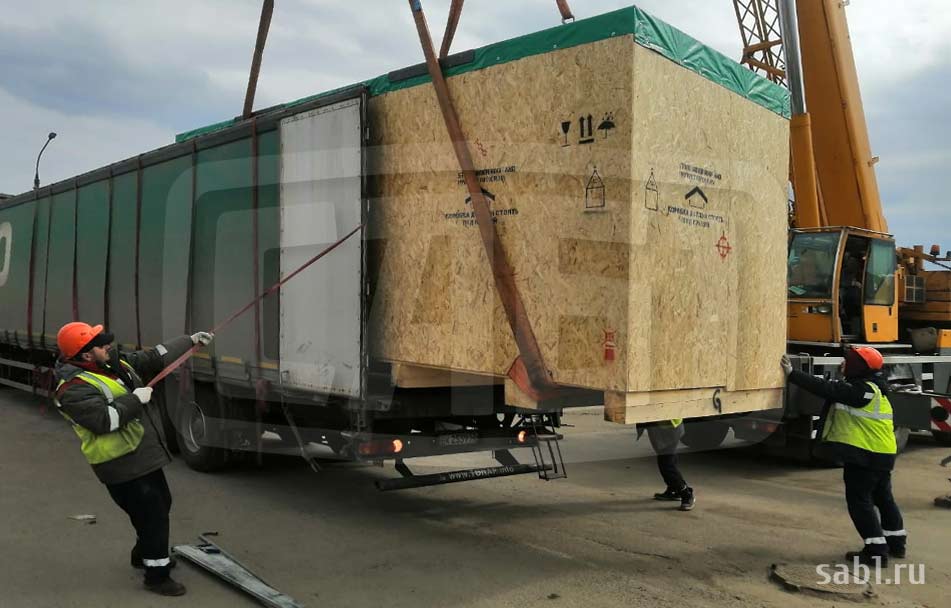
On modern urban sites, the "Laydown Yard" (storage area) is disappearing.
To survive without a laydown yard, your loading unloading services must evolve. You stop managing storage and start managing flow.
The delivery truck essentially becomes your temporary storage. The goal is to move the material from the truck bed directly to the "Point of Use" before the truck engine cools down.
The heart of JIT construction is the "Direct-to-Floor" lift.Instead of offloading a pallet of cement blocks onto the ground, you lift it straight to the masonry team on the third floor.
To do this, standard forklifts usually aren't enough.A standard loading and unloading forklift is excellent for ground work, but it lacks the vertical reach. If you use a forklift, you are forced to put the pallet on the ground, then wait for a tower crane (which is usually busy) to pick it up.
The Solution: Telescopic Handler Rental The Telehandler is the MVP of JIT logistics. It acts as a mobile building material shifting lift.
By using a telehandler, you bypass the ground entirely. The site remains clean, the driveway remains open, and the workers get their materials instantly.
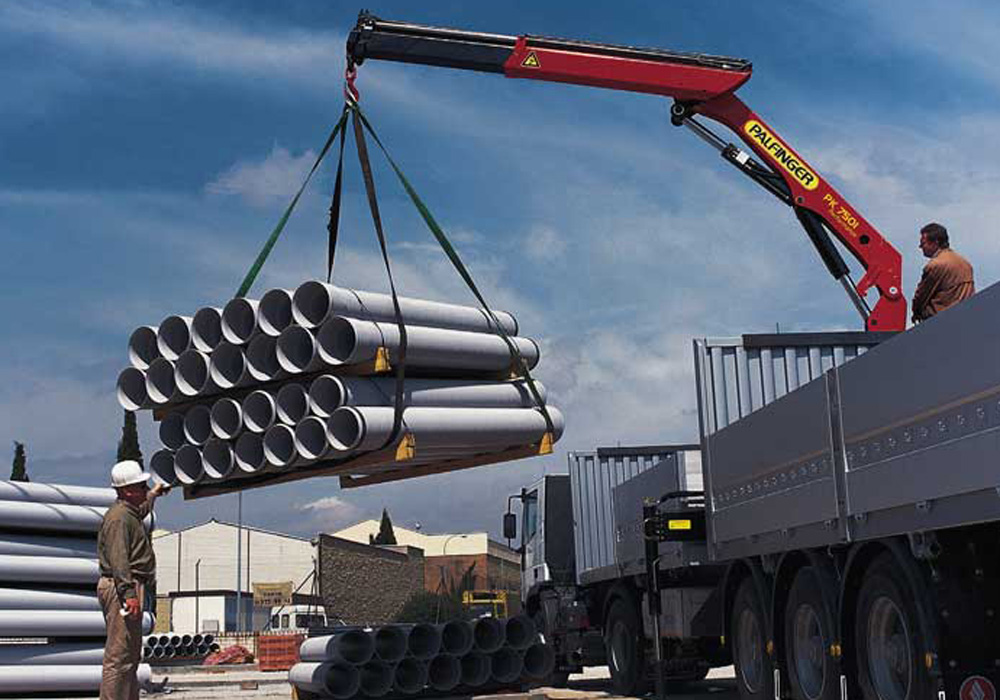
JIT logistics is fragile. If the machine breaks down or the operator is unskilled, the delivery truck sits idle, blocking the road. Municipal fines accumulate, and the project stalls.
This is why choosing a professional loading unloading company is as important as the material itself.You aren't just renting a machine; you are renting reliability.
What to look for in a partner:
Successful JIT relies on a seamless handshake between the logistics provider and the construction team.
JIT isn't just for pallets of bricks. It applies to heavy infrastructure too.Consider the delivery of heavy steel beams or MEP (Mechanical, Electrical, Plumbing) equipment.On a site with no storage, you cannot drop a 2-ton chiller on the ground. It has to go to the roof now.
Construction Material Lifting Equipment for Heavy Loads For these scenarios, the loading unloading services team must be equipped with high-capacity machines.
By treating the delivery as an installation event, you save money on crane mobilization. A high-capacity telehandler can often offload and place structural steel in a single motion, keeping the JIT flow moving.
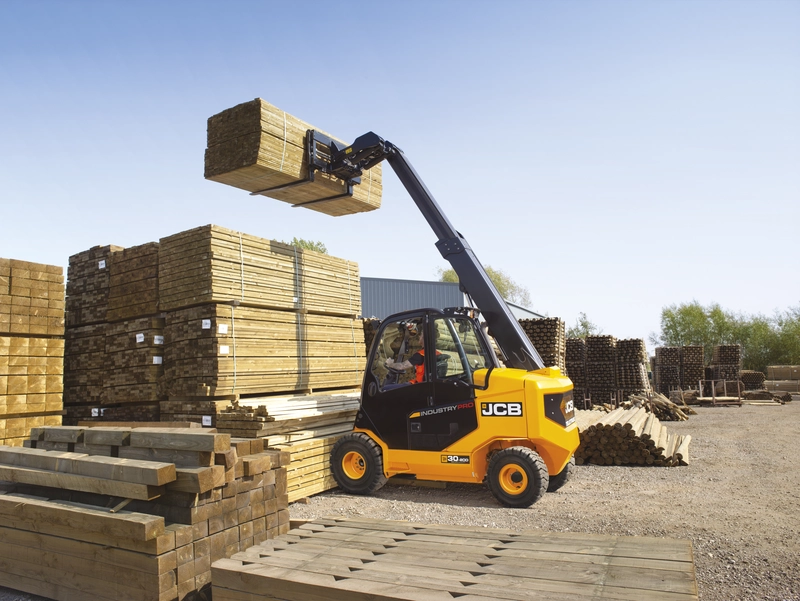
While the telehandler rules the vertical space, the loading and unloading forklift still plays a vital role in JIT, specifically for interior fit-outs and basement works.
Once the building envelope is closed, you can't always boom materials in from the outside.JIT delivery for flooring, cabinetry, and glass often happens via the basement loading dock or ground floor entrance.
The Agile Mover:Here, a compact industrial forklift is essential.
For a comprehensive JIT strategy, a mix of machinery is often required: telescopic handler rental for the shell and core, and forklifts for the finishing stages.
One often overlooked benefit of JIT is safety.A cluttered site is a dangerous site.
By utilizing efficient loading unloading services to move materials directly to their final position, you keep the ground level clear.
Using a proper material lift for construction site logistics isn't just about speed; it's about maintaining a safe working environment in a confined space.
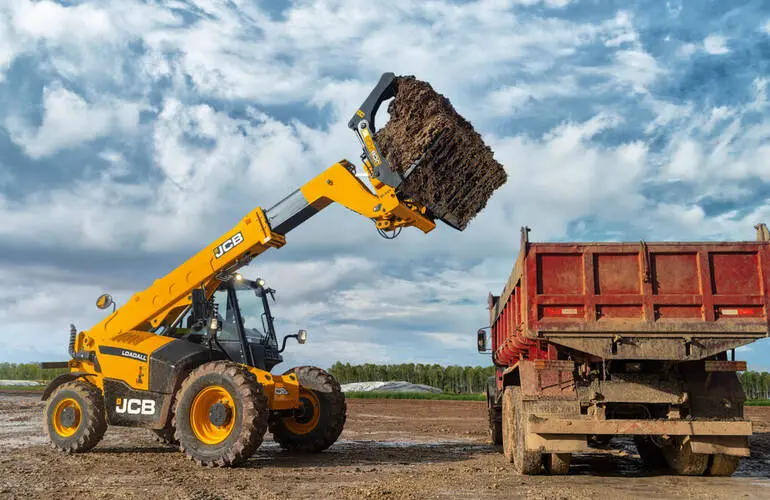
The biggest enemy of JIT in the UAE is traffic. Trucks get delayed.If a truck arrives 2 hours late, your dedicated loading unloading company needs to be flexible.
The Buffer Strategy:While JIT aims for zero storage, smart logistics allow for a "Buffer Zone."Your construction material lifting equipment should be capable of quickly creating a temporary vertical stack if a truck arrives early, or rapidly clearing a zone if multiple trucks arrive at once.
This requires agile machinery. A telehandler can stack pallets 3-high to save floor space, whereas a manual pallet jack cannot. This vertical stacking capability creates artificial storage space out of thin air.
In modern construction, static materials are dead money. Moving materials is where value is added.Just-in-Time logistics is the only way to build efficiently in space-constrained sites. It turns the chaotic bottleneck of the site entrance into a streamlined funnel.
But JIT is only as good as the machinery that powers it. Without a reliable building material shifting lift or a skilled operator, JIT becomes a bottleneck.
Are you struggling with a cramped site and chaotic deliveries?We specialize in On-Site Material Handling for lean construction. Whether you need a loading and unloading forklift for the basement or a telescopic handler rental to reach the roof, we ensure your materials flow smoothly from the truck to the tool.
Don't store it—Install it.Visit our On-Site Material Handling Page to plan your JIT logistics strategy today.
.png)