Pool Removal vs. Filling In: Which Method is Best for Your Villa?
Pool Removal vs. Filling In: Which Method is Best for Your Villa?
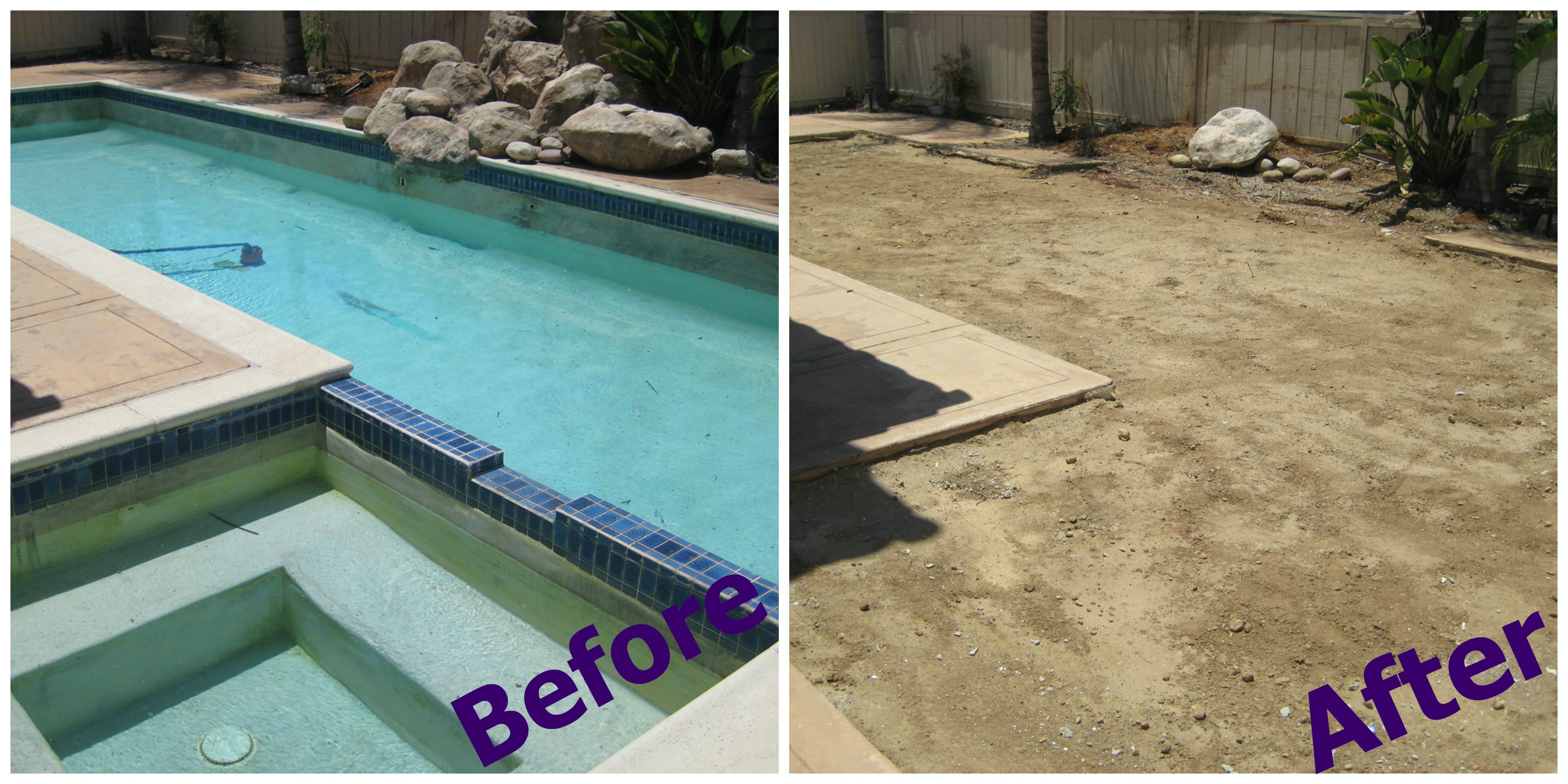
For years, your swimming pool was likely the center of family fun, barbecues, and summer memories. But times change. Children grow up and move out, maintenance costs skyrocket, or perhaps you bought a property with an old, dilapidated pool that is more of an eyesore than an asset.
When the decision is made to reclaim your backyard, you are faced with a significant construction project. However, getting rid of a pool isn't a one-size-fits-all process. Homeowners generally have two main options: Partial Removal (Filling In) or Full Removal.
Searching for "pool removal near me" will yield dozens of contractors, but not all of them will explain the long-term structural and financial implications of these two methods. Making the wrong choice can lead to sinkholes, drainage issues, and complications when you try to sell your home.
In this guide, we will break down the differences between swimming pool demolition techniques, analyze the pool removal cost for each, and help you decide which path is right for your villa.
Option 1: The "Fill-In" (Partial Demolition)
The most common method, often referred to as a "cave-in" or "partial break-down," is the fill-in technique. It is generally the faster and more affordable option, but it comes with limitations.
How It Works
Drainage Holes: The most critical step. The contractor punches large holes (typically 2x2 feet) through the concrete floor of the pool. This turns the pool shell into a sieve, ensuring that rainwater doesn't get trapped, which could create a swamp in your backyard.
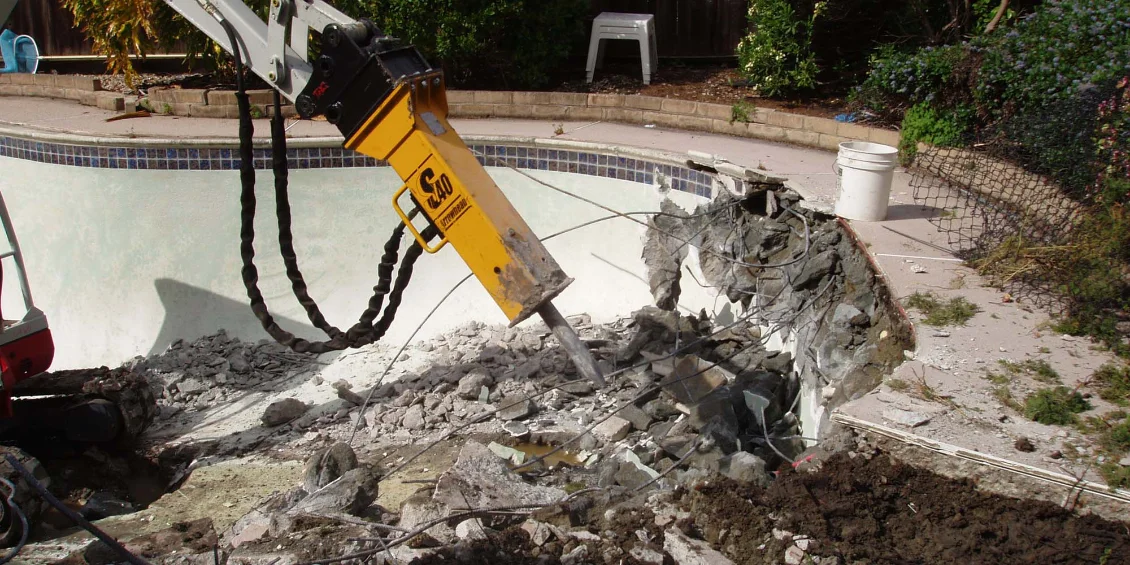
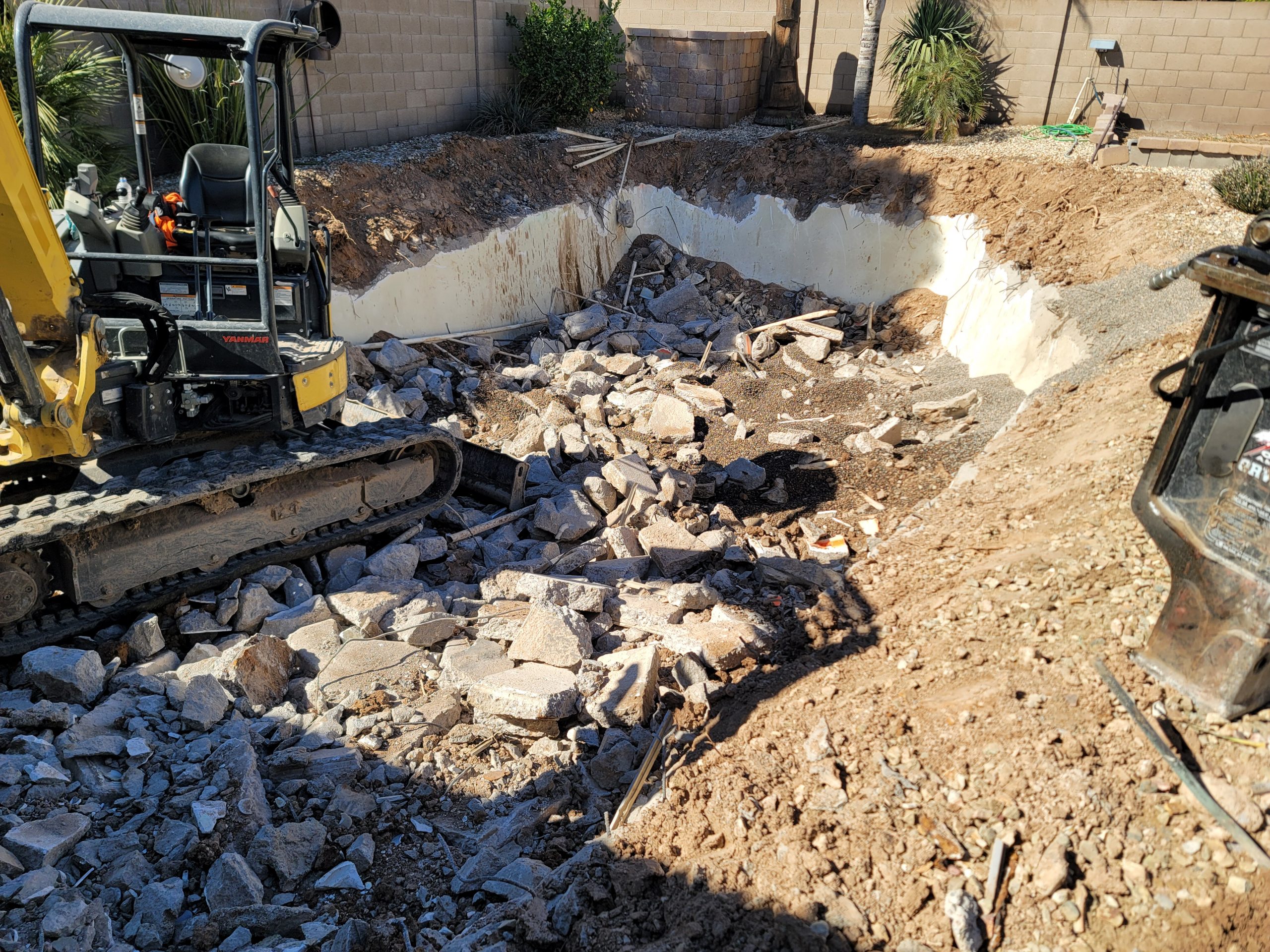
Top Demolition: The top 18 to 24 inches of the pool walls (the bond beam) are demolished. This concrete rubble is tossed into the bottom of the empty pool shell.
Backfilling: The remaining void is filled with soil and compacted in layers.
Landscaping: Topsoil is added, and sod or pavers are installed over the site.
The Pros
Lower Cost: Because you are hauling away less debris (only the coping and tiles usually go to the dump) and buying less fill dirt (since the rubble takes up space), the swimming pool removal cost is significantly lower—often 30% to 50% cheaper than full removal.
Speed: A pool demolition near me team can often finish a partial removal in 2–4 days.
The Cons
Limited Future Use: You cannot build a structure on top of a filled-in pool. If you plan to build a guest house (majlis) or a heavy extension later, the buried concrete rubble makes the ground unstable for foundations.
Disclosure: When selling the home, you must usually disclose that there is a buried pool shell in the yard. This might spook some buyers.
Sinkhole Risk: If the pool demolition contractor fails to compact the soil correctly around the concrete rubble, the ground can settle over time, creating depressions in your lawn.
Option 2: Full Removal (The Clean Slate)
Full swimming pool removal is exactly what it sounds like. It is the gold standard for reclaiming your land and restoring it to its original state (virgin ground).
How It Works
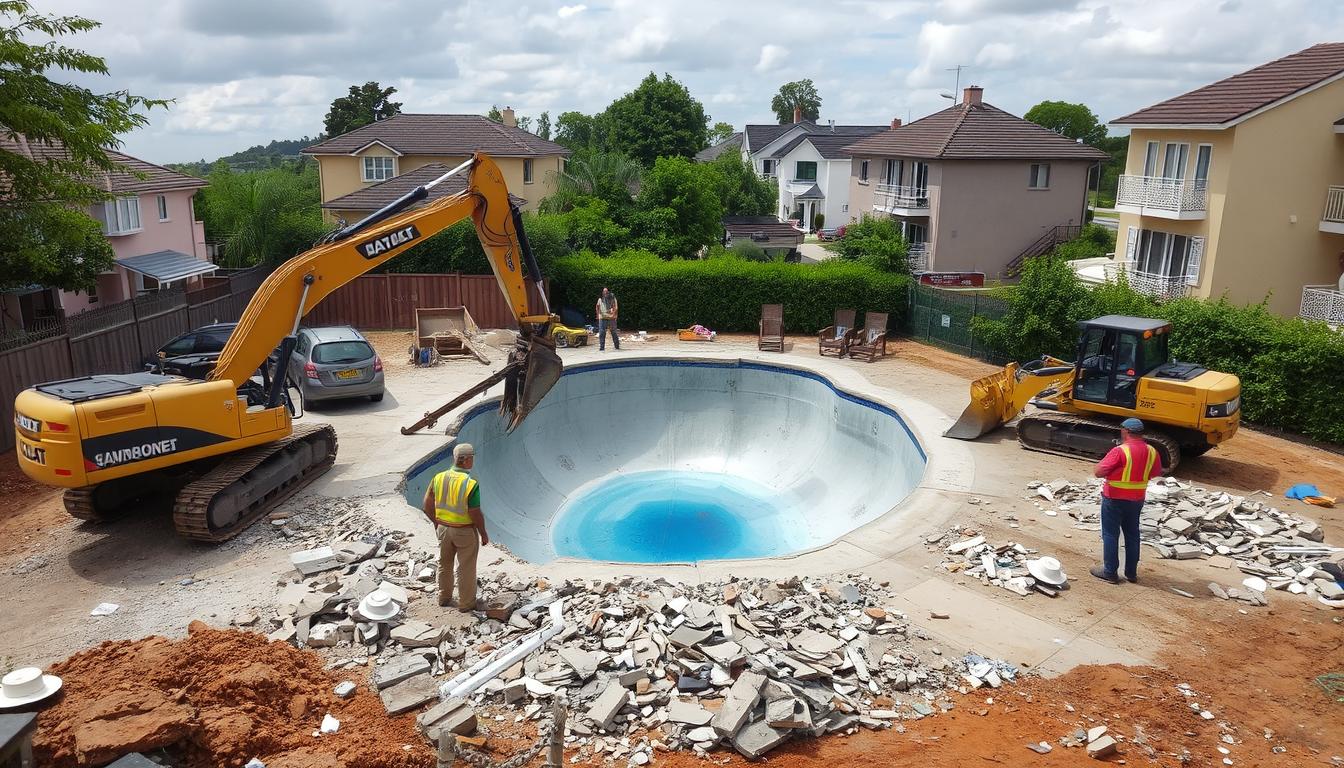
Total Demolition: Heavy machinery is used to break up the entire concrete shell, including the walls and the floor.
Extraction: Every piece of concrete, rebar (steel), and plumbing is removed from the ground.
Haul Away: All debris is loaded onto dump trucks and hauled to a recycling center or landfill.
Backfilling: The large hole is filled entirely with clean, engineered soil (free of rocks and organic matter).
Compaction: The soil is placed in "lifts" (layers) and professionally compacted to ensure density.
The Pros
Build Anything: Once completed, the land is just like the rest of your yard. You can build a new room, a granny flat, or even a new pool in the exact same spot.
Property Value: It eliminates the liability entirely. There is no "buried secret" in the backyard, which can be a selling point.
No Drainage Issues: With no concrete shell left underground, water flows naturally through the soil.
The Cons
Higher Cost: The pool removal cost is higher due to the labor intensity, the disposal fees for tons of concrete, and the cost of importing more soil to fill the hole.
More Disruptive: The project takes longer (5–7 days) and involves more heavy truck traffic to haul away the debris.
The Cost Factor: What Influences the Price?
When you search for "swimming pool removal cost," you will see a wide range of numbers. Why does the price vary so much?
1. Access
Just like with installation, access is king. If we can drive a standard dump truck and a large excavator right up to the pool, the pool demolition cost drops. If we have to use small machines and wheelbarrow debris out to the street through a narrow side alley, the labor costs skyrocket.
2. The Type of Pool
Gunite/Concrete: These are the most expensive to remove because the concrete is thick and heavy steel rebar must be cut.
Fiberglass: These are often cheaper. The shell can sometimes be cut into pieces and removed quickly.
Vinyl Liner: The cheapest to remove. The steel walls are light, and the liner is easy to dispose of.
3. Hauling Fees
Concrete is heavy. A medium-sized pool can generate 40 to 60 tons of concrete rubble. In a full removal, you are paying for the trucks, the fuel, and the landfill tipping fees for every ton. This is the biggest variable in swimming pool removal cost.
The "Sinkhole" Risk: Why Compaction is King
Whether you choose partial or full pool removal, the most important word you need to know is Compaction.
Many homeowners hire the cheapest "pool demolition near me" contractor they can find. Six months later, they wake up to find a 2-foot dip in the middle of their new lawn. Why? Because the contractor just dumped dirt into the hole and smoothed it over.
Soil must be compacted.A professional pool demolition company will:
Add soil in layers of 6 to 12 inches.
Water the soil to achieve the right moisture content.
Run a heavy vibratory plate compactor or a roller over each layer.
This process eliminates air pockets. If you skip this, gravity and rain will eventually collapse those air pockets, ruining your landscaping. When getting quotes for pool removal cost, always ask: "What is your compaction protocol?"
Which Method is Right for Your Villa?
Still undecided? Here is a decision matrix to help you choose between the two swimming pool removal methods.
Choose Partial Removal (Fill-In) If:
Budget is tight: You want the pool gone for the lowest possible pool demolition cost.
Landscaping only: You plan to put grass, a garden, or a light patio (pavers) over the area.
Speed is a priority: You need the project done quickly.
Choose Full Removal If:
Future Building Plans: You might want to build an addition, a guest house, or a garage over the spot in the future.
Property Value Concerns: You want to maintain the highest resale value and avoid disclosing a "buried pool" to potential buyers.
Peace of Mind: You want zero risk of drainage issues or underground obstructions.
The Permitting Process
In Dubai and many other regulated markets, you cannot simply start swinging a wrecking ball. Swimming pool demolition requires permits (NOCs) just like construction does.
Disconnecting Utilities: Before any work begins, water, gas, and electricity running to the pool equipment must be safely capped off by licensed professionals.
Inspections: Some municipalities require an inspection of the bottom holes (in partial removal) to verify drainage before backfilling begins.
Hiring a licensed swimming pool removal near me contractor ensures that all this paperwork is handled correctly, preventing fines later on.
Conclusion: Reclaim Your Space
Removing a swimming pool is a major decision, but it is often a liberating one. It transforms a money-pit liability into a usable, low-maintenance asset.
Whether you opt for the cost-effective partial fill-in or the premium full removal, the key is hiring a pool removal specialist who understands drainage, compaction, and demolition safety. Don't let your backyard be held hostage by a pool you no longer use.
Ready to Demolish?
Are you tired of searching for "pool removal near me" and getting vague answers? Contact us today for a free site assessment. We will evaluate your access, explain the pool removal cost for both options, and help you choose the best path for your property. Let's turn that old pool into your new dream garden.
.png)