To the untrained eye, the landscape of the UAE might appear uniform—a vast expanse of golden sand. However, any construction professional who has broken ground in Dubai, Abu Dhabi, or the Northern Emirates knows that the reality beneath the surface is far more complex.
One kilometer inland, you might find loose, shifting silica sand. Five kilometers away, you might hit "Sabkha" (salt flats) or "Gatch" (cemented sand). Drive toward the mountains, and you are dealing with solid limestone and granite bedrock.
For contractors and property owners planning a project involving ground penetration—whether it is drilling holes for fence posts or installing deep street light pole foundations—this geological variety poses a massive challenge.
The success of the job doesn't just depend on the machine; it depends on the "Business End" of the drill: The Auger Teeth.
Using a sand auger on a rock surface is a recipe for broken equipment and stalled timelines. Conversely, using a heavy rock auger in loose sand can be inefficient. In this guide, we will dive deep into the science of Ground Engaging Tools (GET), explaining why professional auger drilling contractors change their setup based on the soil, and why this matters for your project’s budget and schedule.
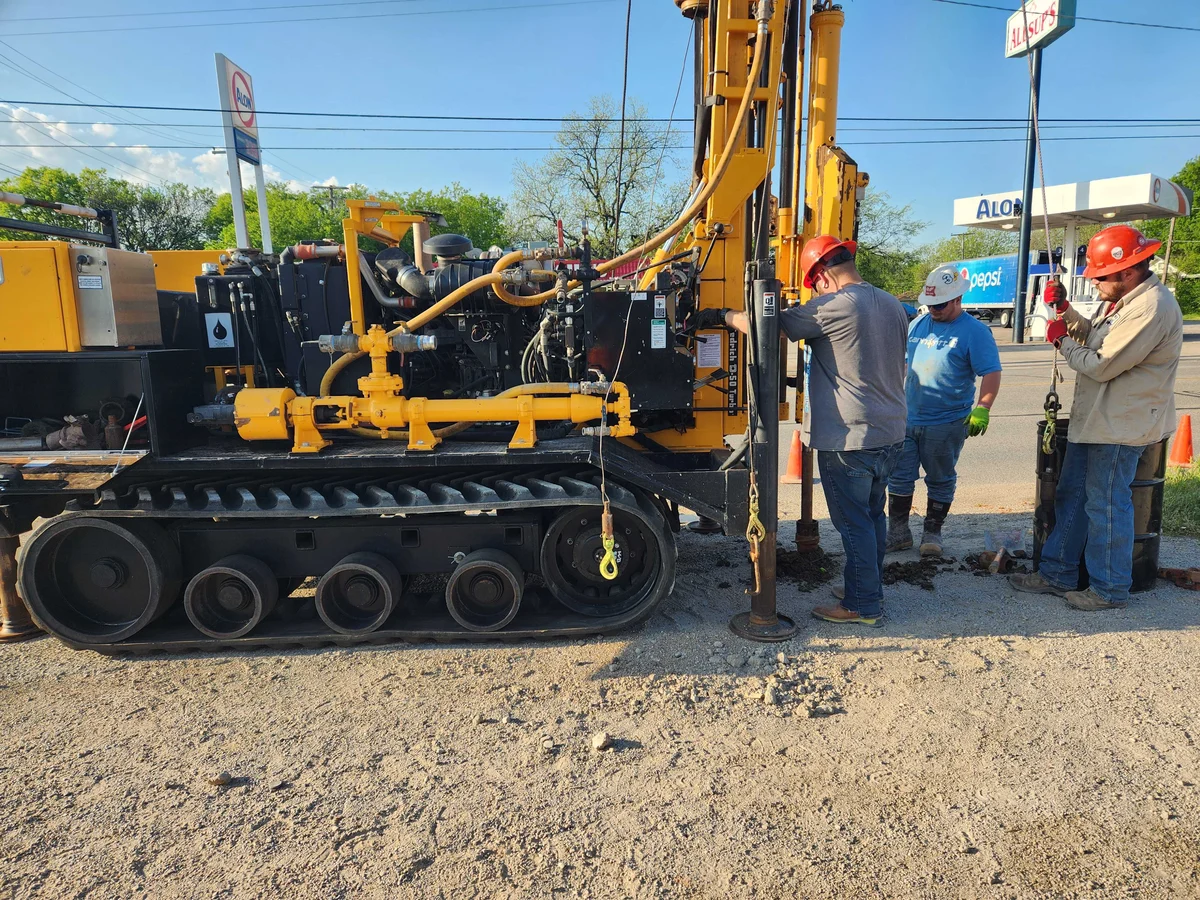
Before selecting the tool, we must understand the material. In the UAE, post hole digging services Dubai generally encounter three main categories of ground conditions:
Found in coastal areas (Jumeirah, Kite Beach) and desert dunes.
Found in inland developments (Arabian Ranches, Silicon Oasis).
Found in rocky areas (Fujairah, parts of Dubailand) or subsurface layers.
For Type A and Type B soils, professionals use what is known as an "Earth Auger."These are equipped with Flat Teeth (often called chisel teeth or spade teeth).
How It Works:The flat teeth act like a shovel. They slice under the soil layer and lift it up the "flights" (the spiral blades of the auger).
If you are hiring someone for fence post installation drilling in a garden in The Springs, this is likely the tool they will use. It is fast, efficient, and leaves a clean, polished hole.

This is where the amateurs fail and the professionals shine. When the ground turns to calcified rock or limestone, a flat tooth is useless. It cannot cut; it can only scrape.
For these conditions, we switch to Rock Augers equipped with Bullet Teeth (conical bits tipped with Tungsten Carbide).
The Science of Fracture:Bullet teeth do not "scoop." They rotate and create point-loaded pressure that fractures the rock.
If you are searching for auger drilling companies near me for a project in a rocky area like Al Ain or the Hatta border, ensure they have rock-ready equipment. Without it, a 1-day job will turn into a 1-week nightmare.
Many general handymen offering cheap post hole digging services Dubai carry a single "General Purpose" auger. They claim it can drill anything.This is a myth.
The Risk of Wrong Selection:
Professional auger drilling contractors carry a full kit. We assess the ground, perform a test drill, and swap the teeth on-site to match the geology perfectly.

Why does this technical detail matter to you? Because the stability of your structure depends on the quality of the foundation hole.
Street lights are tall and heavy. They require deep, perfectly vertical cylindrical holes.If the contractor hits a hard rock layer at 1 meter depth and stops because they have the wrong teeth, the foundation will be too shallow. This is a safety hazard. Proper rock drilling ensures we reach the engineering depth required for the street light pole foundation, regardless of what is underground.
Large commercial signs face immense wind loads. Sign post foundation drilling often requires wide-diameter holes (600mm+). Drilling a wide hole in rock requires immense torque and specialized "Piling Teeth." Only heavy-duty auger attachments can achieve this without stalling the machine.
Imagine you are drilling holes for fence posts along a 1-kilometer boundary. You might start in sand and end in rock.A flexible Bobcat auger service will carry both sets of teeth, swapping them as the terrain changes to maintain a consistent speed of 50-60 holes per day.

The teeth do the cutting, but the machine provides the power.For fence post installation drilling and smaller foundations, we typically utilize Skid Steer Loaders (Bobcats) or Mini Excavators.
Advanced hydraulic drives on our machines allow the operator to adjust these settings instantly. This is the difference between a clean hole and a messy trench.
The soil in the UAE is unforgiving. It breaks machinery and it breaks schedules. But with the right technology, even the hardest rock can be drilled with precision.
When you hire a contractor, don't just ask "Can you dig a hole?" Ask them, "What teeth do you use for this ground?" Their answer will tell you if they are pros or amateurs.
At our company, we don't guess. We inspect, we select, and we drill. Whether you need a Bobcat auger service for a backyard fence or heavy-duty street light pole foundation drilling in bedrock, we have the tungsten-tipped tools to get the job done.
Stop searching for auger drilling companies near me and trust the specialists.Visit our Precision Auger Drilling Page to see our fleet in action and request a quote today.
.png)