Across the Middle East and specifically in the UAE, the landscape is changing. Vast stretches of desert are being transformed into powerhouses of renewable energy. From the Mohammed Bin Rashid Al Maktoum Solar Park to utility-scale projects in Abu Dhabi, the push for solar energy is creating a construction boom.
However, building a solar farm is a logistical and engineering challenge of immense proportions. A 100MW plant doesn't just consist of glass panels; it requires the installation of tens of thousands of steel piles to support the racking systems. These piles act as the skeleton of the entire operation.
The challenge? The desert ground is rarely just soft sand. It is often a mix of cemented sands (gatch), limestone caprock, and abrasive gravel. Driving piles into this ground without preparation leads to bent steel, project delays, and racking misalignment.
The solution lies in Precision Auger Drilling.
In this guide, we explore why pre-drilling is the industry standard for solar farm construction, how auger drilling contractors achieve high-volume output, and how this same technology secures the site through fence post installation drilling.

There is a misconception that installing solar piles is as simple as hammering a tent peg. In reality, commercial solar piles (typically C-channels or I-beams) must penetrate deep into the ground to resist wind uplift.
In many UAE locations, the soil conditions create two major problems for direct pile driving:
Professional auger drilling contractors solve this by "pre-boring."Using specialized rock augers, we drill a pilot hole slightly smaller than the pile diameter. This breaks the hard ground, creates a vertical guide path, and allows the pile to be driven quickly and accurately to the required depth.
Solar racking systems are engineered with tight tolerances. The mounting holes on the rails must align perfectly with the mounting holes on the piles.If a pile is 20mm out of alignment or twisted by 5 degrees, the bolt won't fit.
The Cost of Inaccuracy:
Solar panel pile drilling is not just about digging a hole; it is about surveying and drilling thousands of holes with GPS-guided precision. When the pre-drilling is done correctly, the mechanical installation team can move at lightning speed, bolting frames together without fighting the steel.
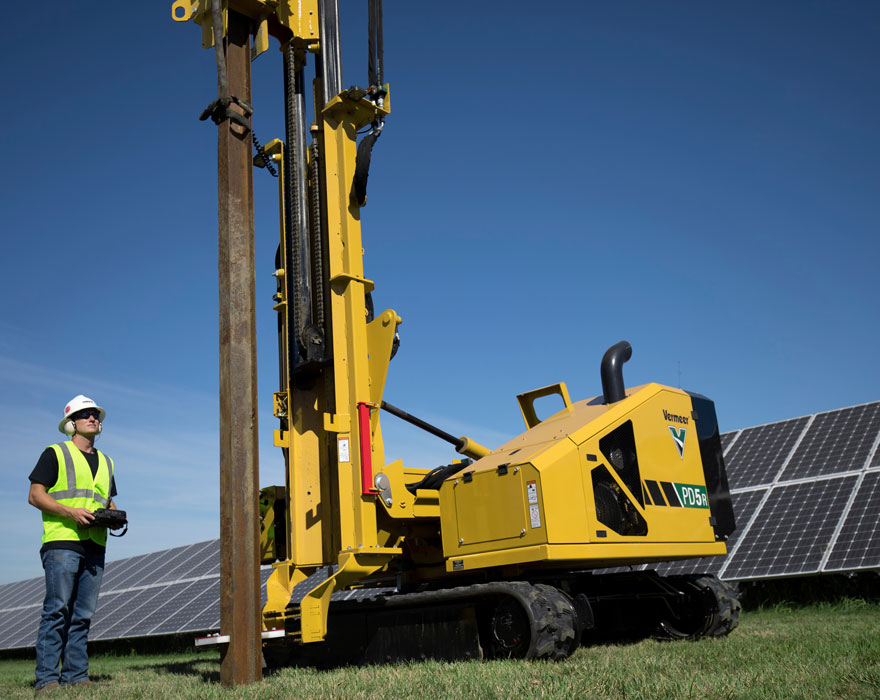
Solar farms are numbers games. A project might require 50,000 piles installed in 3 months.Speed is the currency of the site.
To achieve these targets, we utilize fleets of compact, high-agility machinery—typically Skid Steer Loaders (Bobcats) with high-torque auger attachments.
When searching for auger drilling companies near me for a project of this magnitude, capacity is key. You need a partner with a fleet large enough to keep ahead of the piling rigs.
Before the expensive solar panels arrive on site, the area must be secured. Solar farms usually have perimeters stretching for kilometers.Securing this perimeter requires a robust fence, and that means thousands of fence posts.
Drilling holes for fence posts is performed using the same technology as the solar piles, but often with different specifications.
Fence post installation drilling is the first line of defense for your asset. It ensures the security fence is straight, stable, and installed rapidly so that construction can proceed safely inside.
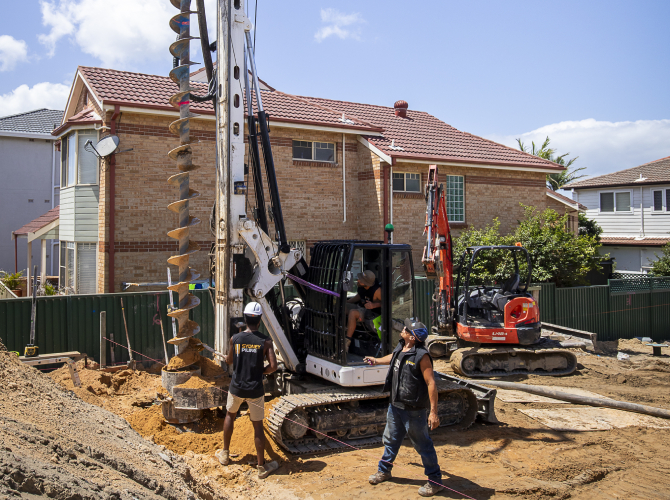
A solar farm is a grid of service roads. Maintenance teams need to navigate these roads day and night to clean panels and inspect inverters. This requires signage and lighting.
Service roads need illumination for security and safety. Street lights are heavy and subject to high wind loads in open deserts.Installing them requires street light pole foundation drilling—typically wider (450mm - 600mm) and deeper than solar piles. Precision augers ensure these foundations are perfectly vertical, so the light poles stand straight.
Wayfinding is critical in a massive solar array. Signage indicating "Inverter Station 4" or "Exit to Main Road" needs to be robust. Sign post foundation drilling ensures that even large directional signs have deep, solid roots to withstand sandstorms. Using an auger allows these foundations to be drilled through the compacted road base of the service tracks without damaging the surrounding surface.
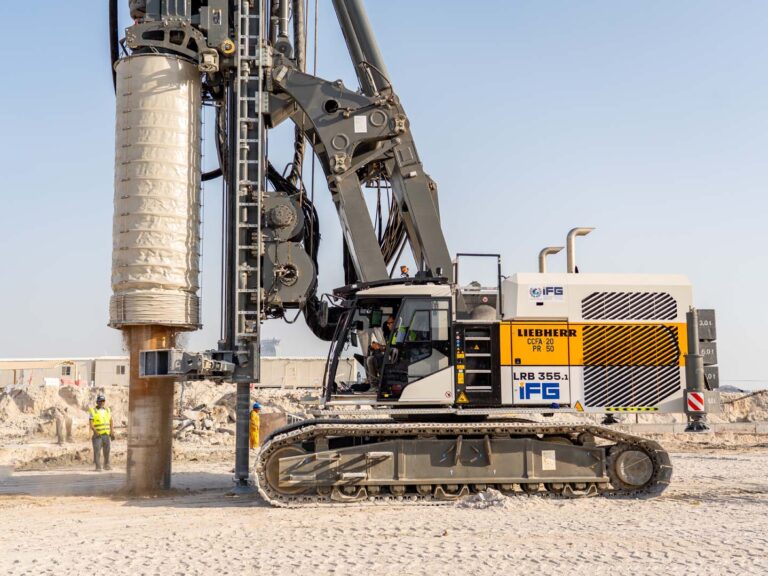
We often see general earthworks companies attempting to bid for solar drilling. They often fail for two reasons:
When you search for auger drilling companies near me, look for those with specific EPC experience. You need a partner who understands the difference between a hole for a tree and a pilot hole for a structural pile.
The success of a solar farm isn't just about the efficiency of the panels; it's about the efficiency of the construction.Precision Auger Drilling is the enabler of modern solar construction. It conquers the hard ground, accelerates the timeline, and ensures the mechanical integrity of the mounting systems.
From the first fence post installation drilling on the boundary to the final solar panel pile drilling in the array, our fleet drives the project forward.
Do not let ground conditions delay your energy goals. We are the specialists in high-volume, high-precision drilling for the solar sector. Whether you need sign post foundation drilling or thousands of pilot holes for piles, we have the machinery to deliver.
Visit our Precision Auger Drilling Page to view our fleet capabilities and request a consultation for your next solar project.
.png)