In the fast-paced construction industry of the UAE, time is the most expensive commodity. From the bustling ports of Jebel Ali to the remote desert construction sites of Al Ain, the movement of materials never stops. However, the efficiency of this movement depends entirely on one decision: choosing the right equipment.
For site managers and logistics coordinators, the debate often comes down to two machines: the Industrial Forklift and the Telehandler (Telescopic Handler).
At a glance, both seem to do the same job—lifting heavy pallets. But using a warehouse forklift on a sandy construction site is a recipe for disaster, just as using a massive telehandler for precise container loading unloading inside a tight warehouse is inefficient.
Making the wrong choice leads to stalled operations, damaged goods, and safety hazards. To optimize your loading unloading services, you must understand the specific capabilities of each machine.
In this comprehensive guide, we will break down the differences, explore which machine is best for loading and unloading containers, and help you decide which equipment allows for the safest lifting construction materials on your specific site.
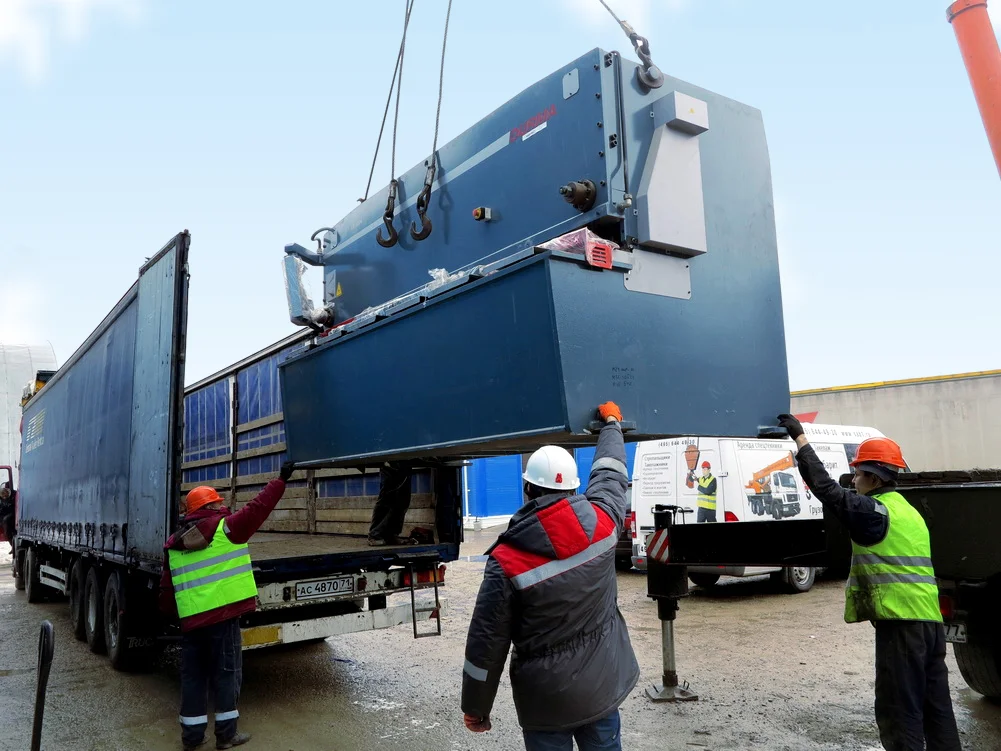
The standard masted forklift is the workhorse of the logistics world. Compact, agile, and designed with a tight turning radius, it is the undisputed king of paved surfaces.
If your project is in the finishing stages—where driveways are paved and warehouse floors are poured—a loading and unloading forklift is your best option. It provides stability and speed that heavier machines cannot match in confined spaces.
When it comes to container unloading services, the forklift is often the primary tool if you have a loading dock/ramp.Because a forklift is compact, it can drive inside the shipping container. This is crucial for:
However, the forklift has a major weakness: It cannot handle the rough.If you hire a standard forklift for a sandy, uneven construction site without a proper loading bay, it will get stuck. It requires a flat, hard surface to operate safely.
The Telehandler (often called a Loadall or Zoom Boom) is a hybrid. It combines the lifting capability of a forklift with the reach of a crane and the off-road ability of a tractor. For most UAE construction sites, which often lack paved access roads in the early stages, telescopic handler rental is the standard solution.
Unlike a forklift, which only lifts vertically, a telehandler has a boom that extends forwards and upwards.This is vital for lifting construction materials to the "point of use."
Telehandlers are equipped with 4-wheel drive and large, tractor-style tires. They are designed to float over loose sand, gravel, and mud. If your loading unloading company needs to move steel beams from a drop-off point at the gate across 200 meters of raw desert sand to the building foundation, the telehandler is the only machine for the job.
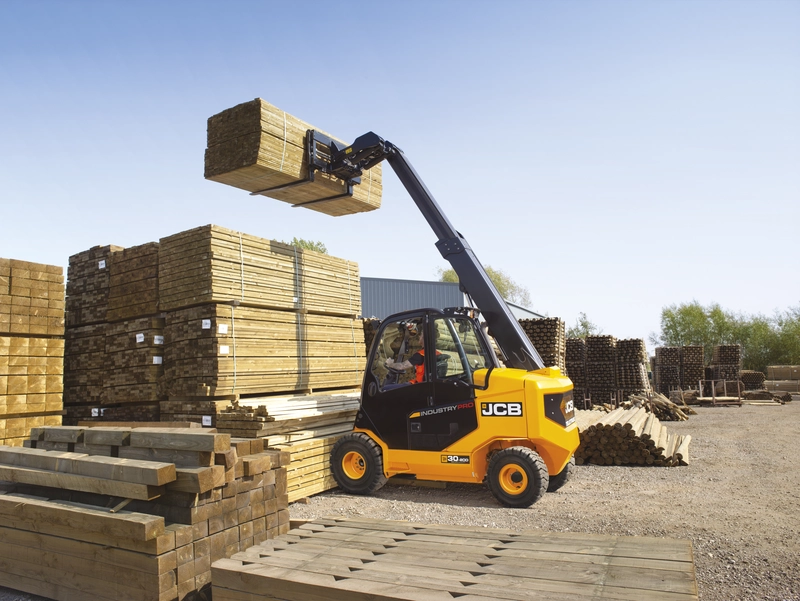
One of the most common requests we receive is for loading and unloading containers on sites that do not have a loading dock. This creates a logistical headache.
When a truck delivers a shipping container to a sandy construction site, the container usually sits on the trailer chassis (high off the ground) or is dropped onto the sand. A standard forklift cannot reach into the container from the ground level because it doesn't have the height or the reach.
The Telehandler Solution:This is where the telehandler shines in unload container service.
If you are coordinating container loading unloading on a raw site, telescopic handler rental is almost always the safer and more efficient choice.
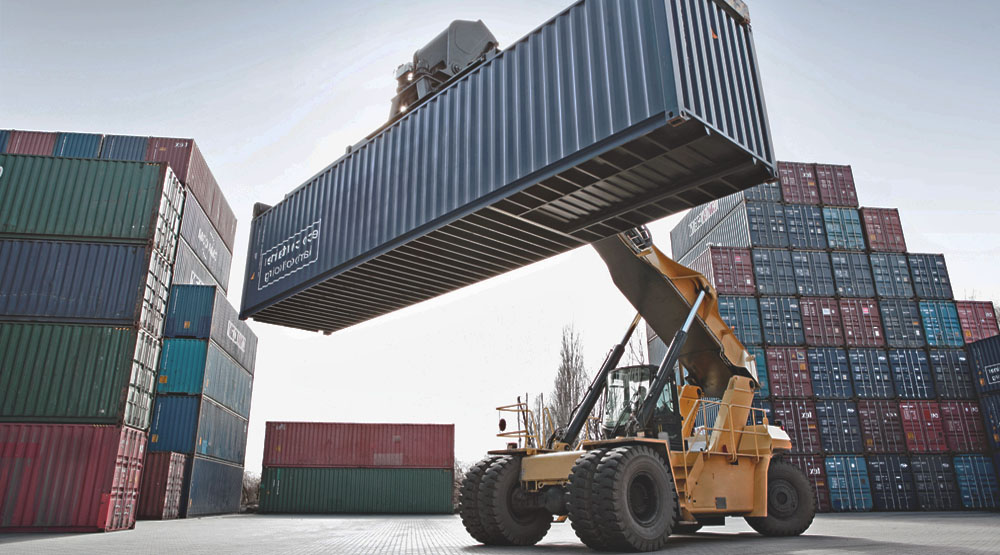
A major factor when choosing a loading unloading company is versatility.A forklift typically has one attachment: Forks.A telehandler, however, is a multi-tool.
By using a "Quick Hitch" system, a telehandler can swap attachments in seconds, transforming its role on site:
For a construction manager, this versatility means you are getting three pieces of construction material lifting equipment for the price of one rental.
Safety is non-negotiable. Both machines present different risks during loading unloading services.
Forklift Risks:
Telehandler Safety Features:
For loading and unloading containers on uneven ground, the telehandler offers a much higher safety margin due to these stabilizing features.
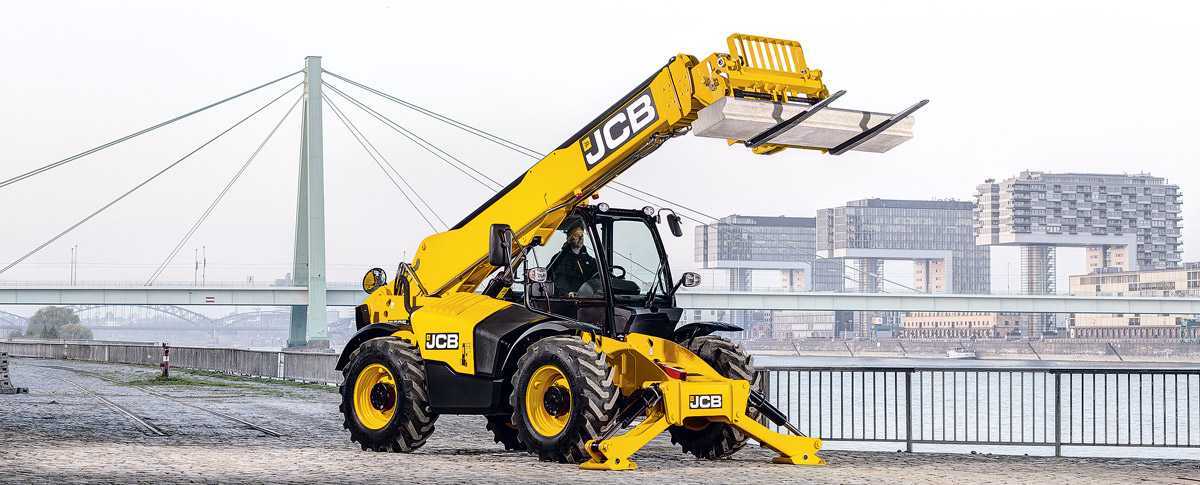
Finally, let’s talk about the budget.A standard loading and unloading forklift is generally cheaper to rent per day than a telehandler.However, "Cheaper" does not always mean "More Cost-Effective."
Consider the Scenario:You hire a cheap forklift for your villa project.
In this scenario, the "cheap" forklift cost you thousands in delays and labor.Hiring a telescopic handler rental from the start would have allowed you to unload the truck and place the tiles directly at the front door in one smooth operation.
The choice between a Telehandler and a Forklift is not about which machine is "better"—it is about which machine fits your site conditions.
At our company, we understand that every site is unique. We don't just rent machines; we provide comprehensive On-Site Material Handling solutions. Whether you need a simple loading and unloading forklift or a heavy-duty telehandler, we have the fleet to keep your project moving.
Stop wasting time on manual handling and stuck machinery. Trust the experts in loading unloading services. We provide skilled operators and the right construction material lifting equipment to ensure your materials arrive safely, on time, and at the point of use.
Visit our On-Site Material Handling Page to request a quote for your next project.
.png)