In the construction industry, we obsess over the price of materials. We negotiate the cost per bag of cement, the rate for steel reinforcement, and the rental fees for cranes. Yet, there is a silent budget killer operating on almost every site in the UAE, bleeding money from the bottom line without ever appearing on a purchase order.
It is called "Double-Handling."
Double-handling occurs when a material is delivered to a site, unloaded into a temporary holding area, and then moved again (sometimes multiple times) before it finally reaches its point of installation.
Every time you touch a material, it costs money. You pay for the labor, you pay for the machine hours, you risk damaging the product, and you expose your workforce to safety risks.
If you are hiring a loading unloading company to drop items at the gate, only to hire another team to move them to the building later, you are paying twice for the same job.
In this guide, we will expose the hidden costs of inefficient logistics. We will look at how professional loading unloading services, strategic container unloading services, and expert industrial equipment movers can implement a "One-Touch" philosophy that saves you time and money.
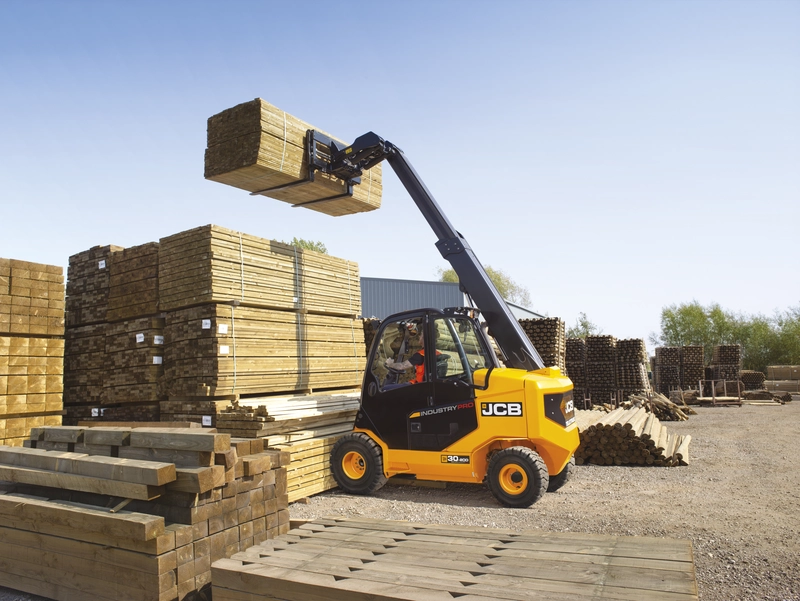
To understand the cost, we must break down the movement.Let’s look at a pallet of ceramic tiles.
The Double-Handling Scenario:
The One-Touch Scenario:
In the first scenario, you paid for a machine twice and labor three times. In the second, you paid once. Multiply this by thousands of pallets over a project lifecycle, and the wastage is astronomical.
The shipping container is one of the most frequent sources of double-handling friction.When a 40ft container arrives at a site without a loading dock, panic often sets in. The driver is on a schedule, and the site manager needs the box cleared now.
The "Panic Unload" Mistake:Without a proper plan, crews will often hand-ball loose items or drag pallets out and dump them on the ground immediately surrounding the container doors.This creates a "blast radius" of clutter. The container leaves, but now you have a pile of mixed materials blocking the driveway. You now have to spend the next two days organizing and moving this pile.
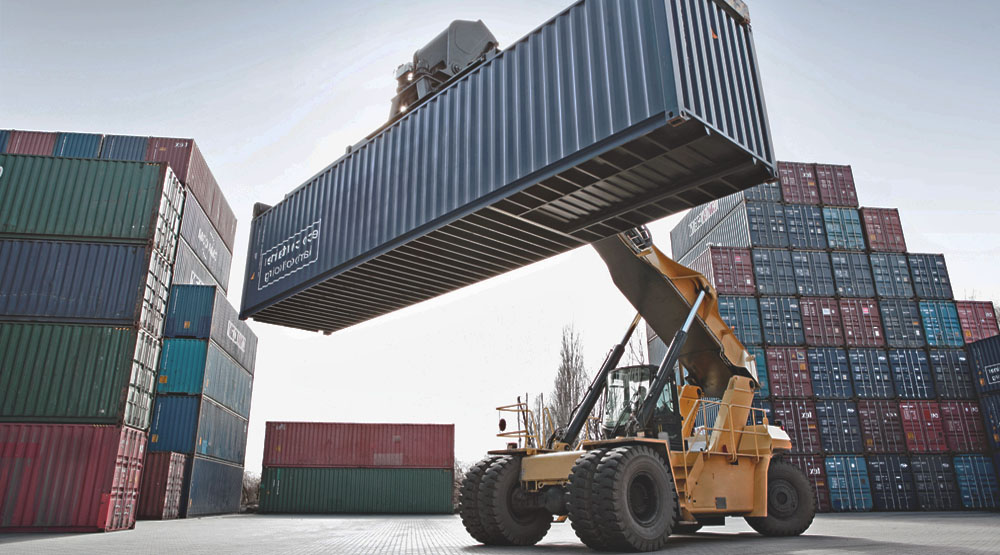
The Solution: Professional Container Unloading Services Optimizing loading and unloading containers requires the right machinery. By utilizing a telescopic handler or a specialized loading and unloading forklift with long tines, you can unload the container and place the items directly into their designated storage zones in one motion.
Efficient container loading unloading isn't just about emptying the box; it's about organizing the site simultaneously.
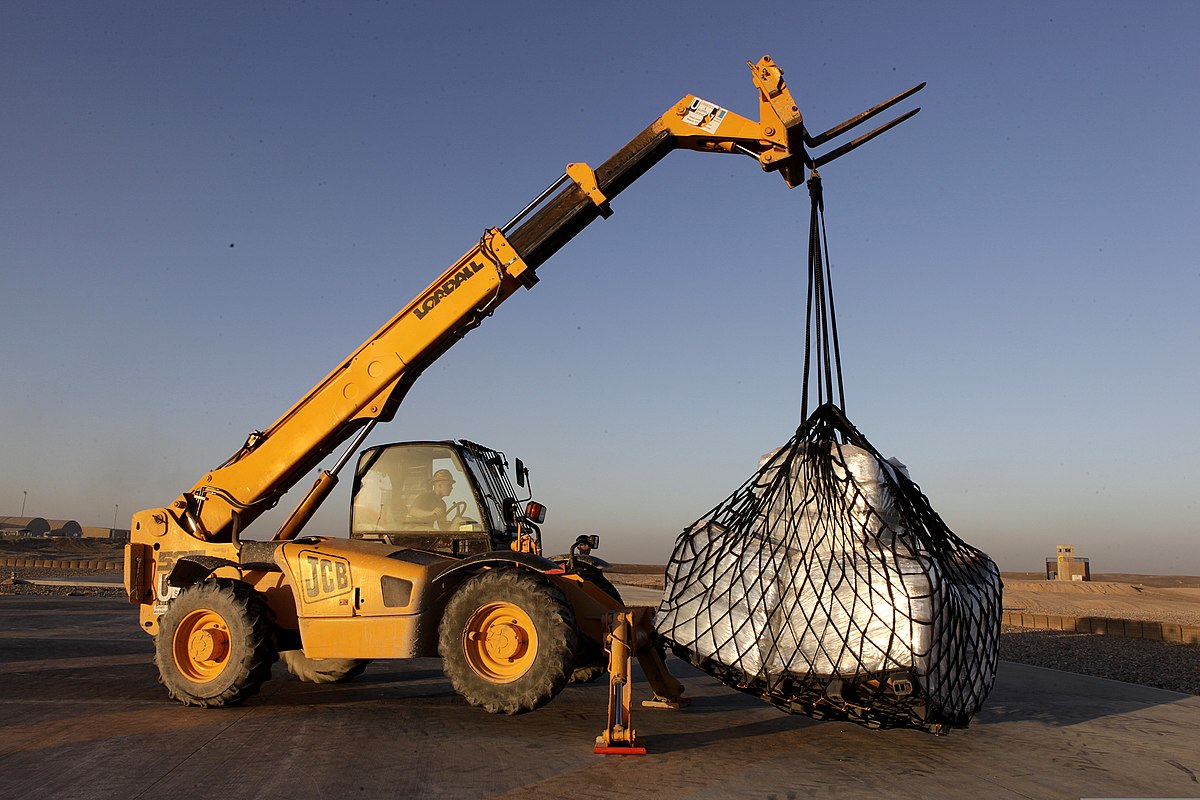
Many sites attempt to solve logistics by renting a standard loading and unloading forklift. While this is a useful machine, it often contributes to double-handling on UAE sites.
Why?A standard warehouse forklift has small tires. It cannot drive on sand, gravel, or rough sub-base.Therefore, the forklift is tethered to the paved area near the gate. It forces double-handling because it physically cannot take the material to the building. It can only take it off the truck and leave it on the concrete pad.
To avoid this, you need loading unloading services that provide Rough Terrain equipment (Telehandlers). These machines bridge the gap between the delivery truck and the installation point, regardless of the ground conditions.
Double-handling becomes exponentially more expensive and dangerous when dealing with large assets.Generators, compressors, fuel tanks, and industrial chillers are not things you want to move twice.
The Risks of "Shuffling" Equipment:
The Solution: Expert Machinery Moving CompanyWhen moving heavy machinery, the goal must be "Direct-to-Plinth."Professional industrial equipment movers plan the lift before the truck arrives.
By acting as a specialized machinery moving company, we ensure that heavy assets are offloaded and positioned in their final resting place immediately.
Another form of double-handling is "Manual Distribution."This happens when a loading and unloading forklift places a pallet of blocks at the base of the building, and then 10 laborers spend the day carrying the blocks by hand to different rooms.
The hidden cost here is time. A skilled loading unloading company using the right heavy load moving equipment (like a telehandler with a material bucket or pallet forks) can distribute those materials to the window openings of each room.
The ROI Calculation:
Even with the rental cost of the machine, the mechanical method is vastly cheaper and frees up your laborers to do skilled work (like laying the bricks) rather than carrying them.
The ultimate cure for double-handling is JIT delivery. This means materials arrive exactly when they are needed for installation, not weeks before.However, JIT requires a logistics partner who is fast.
If a truck arrives with steel beams that are needed now, you cannot afford to have them sit in a pile. You need loading unloading services that can take them from the truck and hold them while they are bolted into place, or place them on the erection deck.
This level of coordination requires a machinery moving company mindset—treating every load as a critical mission.

Do you suspect you are losing budget? Walk your site today and ask these three questions:
Construction is about building structures, not moving piles of material from point A to point B to point C. Every minute your team spends double-handling material is a minute they are not building.
To stop the budget bleed, you need a partner who understands On-Site Material Handling. You need the right heavy load moving equipment, the right strategy for loading and unloading containers, and the expertise of industrial equipment movers.
Don't let inefficient logistics eat your profits. We provide comprehensive loading unloading services designed to get your materials to the point of use efficiently and safely.
From unload container service to moving heavy machinery, we have the fleet and the expertise to streamline your site.
Ready to optimize your flow?Visit our On-Site Material Handling Page to discuss your logistics plan today.
.png)