You have made the big decision. The old swimming pool is going. You are ready to trade the chemical bills and the maintenance headaches for a sprawling green lawn, a new patio, or perhaps a garden extension. You have searched for swimming pool demolition providers, and you are comparing quotes.
But there is a hidden danger in this process that many homeowners—and even some inexperienced contractors—overlook. It is the risk of the Sinkhole.
We have all seen the horror stories: a family removes a pool, lays down beautiful new turf, and six months later, after a heavy rainstorm, a massive depression opens up in the yard. The patio cracks, the fence leans, and the ground literally swallows the investment.
This nightmare scenario is almost always caused by one thing: Improper Soil Compaction.
In this guide, we will dive deep into the science of backfilling. We will explain why simply dumping dirt into a hole is a recipe for disaster, how professional pool removal is done correctly, and why utilizing the right heavy machinery—like a compact excavator for rent—is non-negotiable.
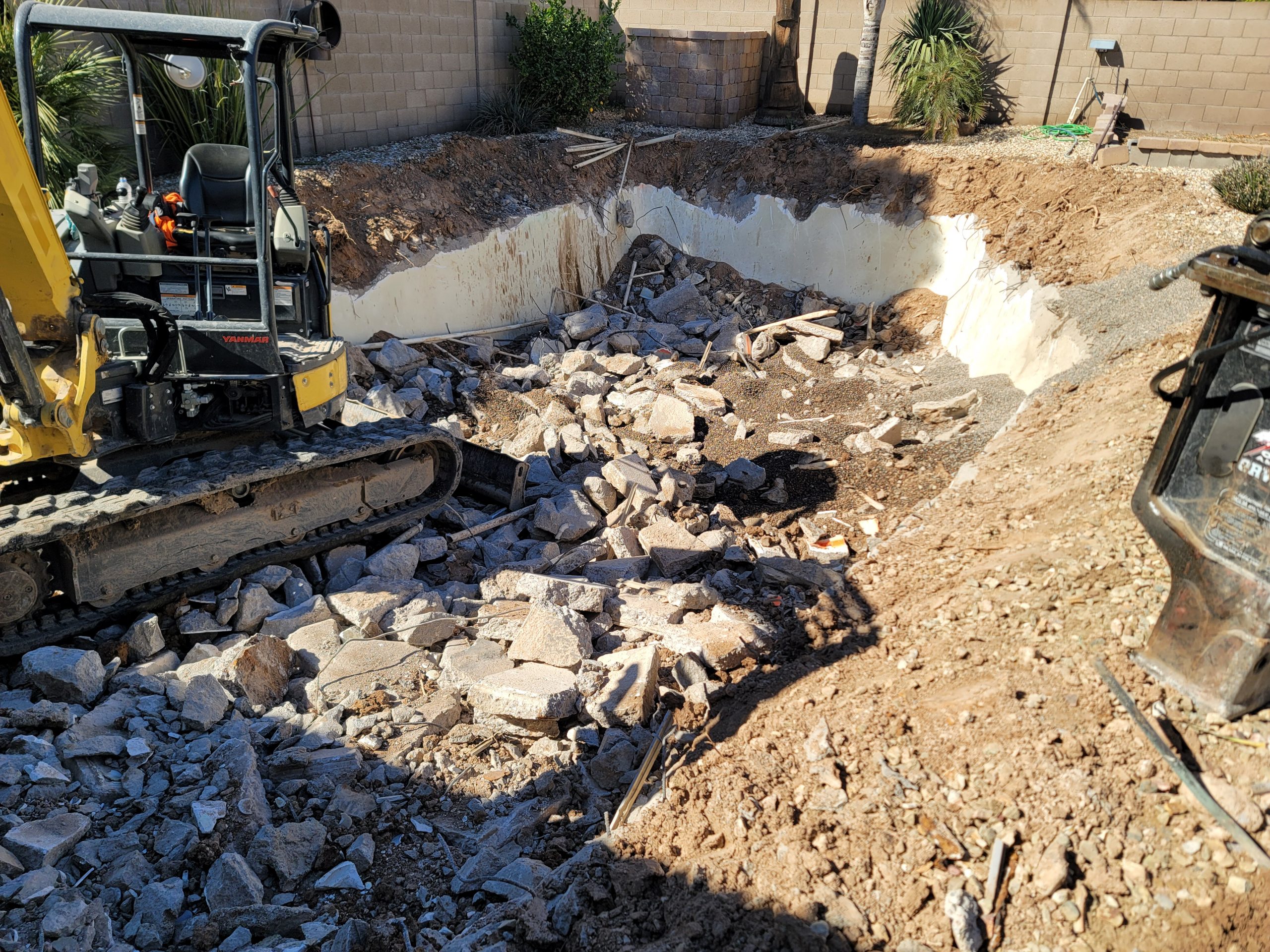
To understand the risk, you have to understand the volume of the void you are creating. A standard residential swimming pool holds anywhere from 15,000 to 30,000 gallons of water. When you perform pool demolition, you are creating a massive cavern in the earth that needs to be filled.
A common misconception is that you can simply back up a dump truck, tip 20 loads of dirt into the hole, smooth it over, and walk away.If you do this, the soil will be "loose." It is filled with billions of tiny air pockets.
Over time, gravity, rain, and irrigation will cause those soil particles to settle closer together, squeezing the air out. This process is called "settlement."
That is not just a dip in the lawn; that is a sinkhole deep enough to twist an ankle, crack a concrete slab, or rupture underground plumbing pipes.
Professional swimming pool removal contractors do not dump; they build. The process of filling a pool hole is a strategic engineering feat that requires patience and machinery. It involves a technique called "compacting in lifts."
We never fill the hole all at once. The soil is introduced in layers, known as "lifts," typically measuring 8 to 12 inches thick.If the contractor tries to compact 4 feet of dirt at once, the machine will only pack down the top 6 inches. The bottom 3.5 feet remain loose (the "bridging effect"). By working in thin layers, we ensure density from the very bottom to the very top.
Have you ever tried to build a sandcastle with dry sand? It crumbles. You need water to bind it.The same applies to pool removal. As each layer of soil is added, we spray it with water. The water acts as a lubricant, allowing the soil particles to slide past each other and lock tightly together, removing the air voids.
This is where the heavy iron comes in. You cannot compact a pool hole by stomping on it. You need vibration and weight. We run a heavy vibratory plate compactor or a roller over every square inch of the lift before adding the next layer.
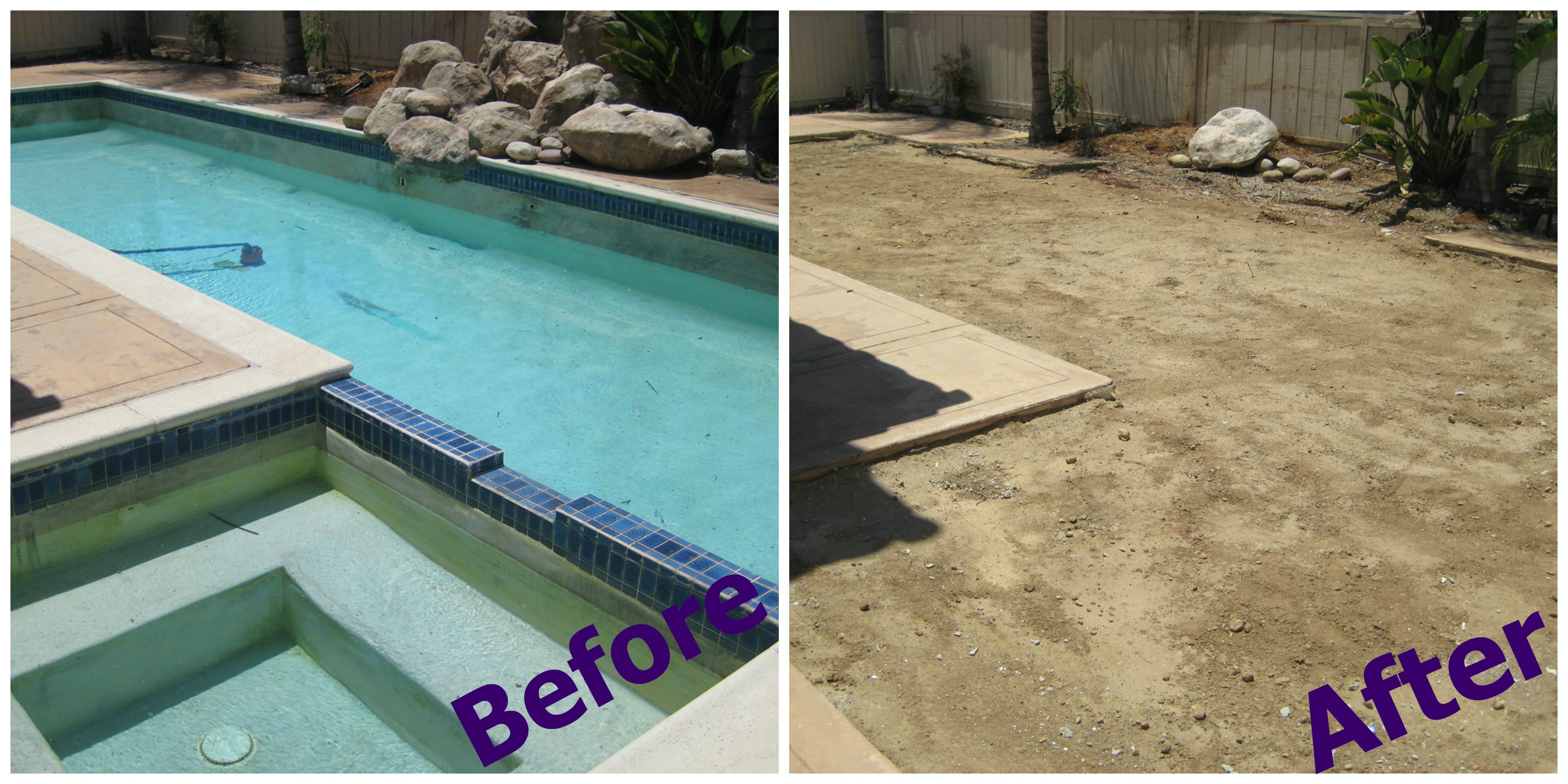
If you are a DIY enthusiast considering renting equipment, or if you are vetting a contractor, the choice of machinery dictates the quality of the compaction.
For most residential backyards, space is tight. You cannot fit a massive road roller into the garden. This is why mini digger hire is the industry standard for this work.
A compact excavator for rent is the MVP of pool removals.
If you are looking for digger hire, ensure you get a machine that is heavy enough to provide down-pressure (typically 3 tons or larger) but small enough to fit through your access gate. A mini excavator hire is useless if it damages your house on the way in, but essential for ensuring the ground is solid.
The pool demolition cost often dictates the method a homeowner chooses, but the method affects the sinkhole risk.
In this method, the top of the pool is broken off, thrown into the bottom, and covered with dirt.
In this method, all concrete is removed.
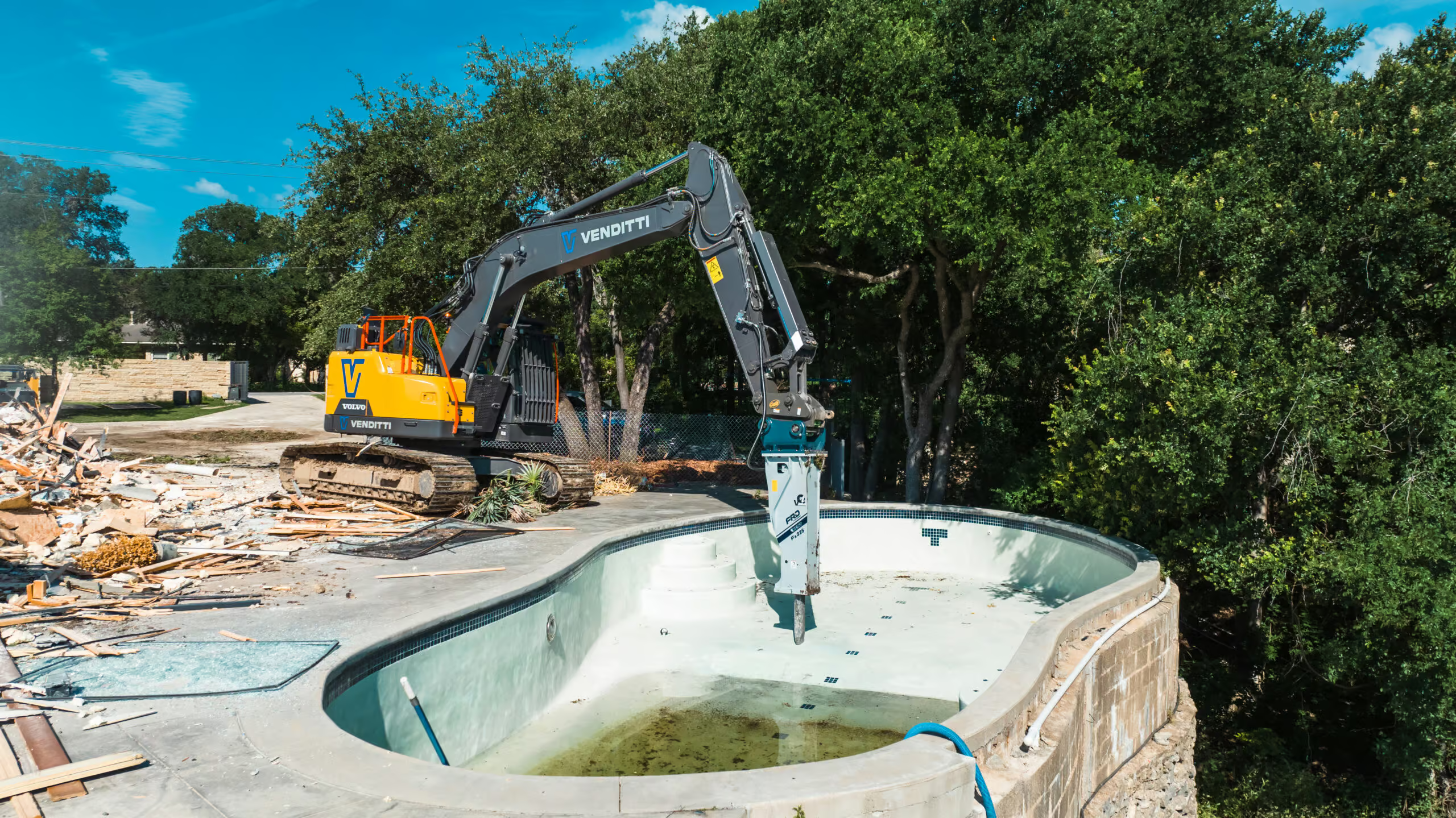
When you solicit bids for swimming pool removal, you will likely see a wide range of prices.
Why is Contractor A so cheap? Often, it is because they are skipping the compaction steps.Compacting in lifts takes time. It requires the machine and the operator to be on-site for an extra day or two. It requires burning more fuel and renting the mini digger hire for a longer period.
Contractor A plans to dump the dirt, smooth it out, and leave. Contractor B plans to build you a stable yard.If you choose the cheap option, you aren't saving $6,000. You are deferring a $20,000 repair bill for when the ground collapses next year.
Don't just take their word for it. When hiring for pool demolition, ask these specific questions:
Some homeowners think, "I'll rent a compact excavator for rent and do it myself to save on pool removal cost."While mini excavator hire is accessible, the skill of compaction is learned. If you don't know how to mix the soil types or judge the moisture content, you might create a mud pit or a dust bowl that never settles correctly. Unless you have heavy equipment experience, this is a job best left to pros.
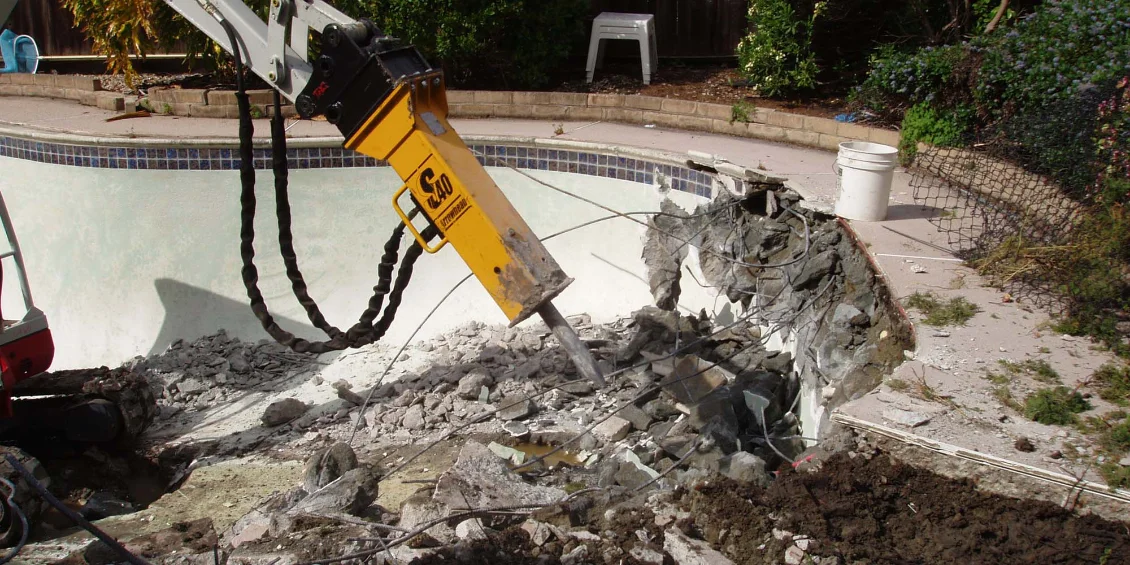
The goal of removing a pool is to increase your property's usability and value. A sinkhole achieves the exact opposite.
While the pool demolition cost is a significant investment, paying for proper compaction is the insurance policy for your land. It ensures that 5 years from now, your new patio will be just as flat as the day it was laid.
Whether you are hiring a professional or considering a robust DIY project with digger hire, remember: The most important part of the job isn't digging the hole; it's how you fill it back up.
Don't gamble with your ground. If you are looking for trusted experts in swimming pool demolition who prioritize safety and stability, contact us today. We own our fleet of heavy machinery and follow strict compaction protocols to ensure your yard stays solid forever.
.png)